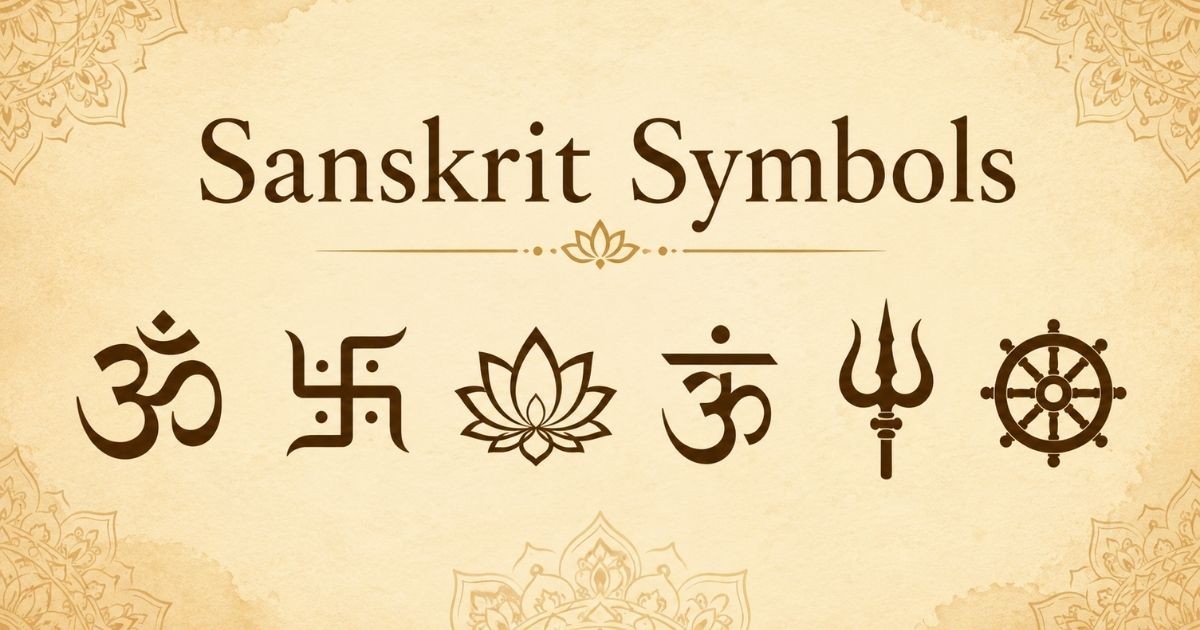

Sanskrit symbols are among the most powerful and spiritually rich visual languages ever created by human civilization. If you’ve ever felt drawn to that Om symbol on a yoga mat or wondered what the lotus flower really means, you’re not alone. Millions of Americans are exploring these ancient signs today, not just for their beauty, but for the deep meaning they carry.
These symbols aren’t just decorative. They’re living expressions of universal truths that have guided people for over 3,000 years. Whether you’re curious about Sanskrit tattoos, meditation practices, or simply want to understand what these symbols mean, this guide covers everything you need to know.
What Are Sanskrit Symbols?
Sanskrit symbols are sacred visual signs rooted in one of the oldest known languages in human history. Sanskrit originated in ancient India around 1500 BCE and became the foundation for texts like the Vedas, Upanishads, and Bhagavad Gita. These symbols aren’t just letters or pretty designs. Each one carries a specific spiritual vibration, philosophical meaning, and energetic intention behind it.
What makes Sanskrit symbols unique is how they function on multiple levels at once. They work as spiritual tools, artistic expressions, and psychological anchors. Unlike modern logos or icons, these symbols were designed with the belief that their very shape holds power. That’s why you’ll find them carved into 2,000-year-old temple walls and tattooed on arms in New York City in the same decade.
Read This: 63+ Mysterious Filipino Symbols and Their Hidden Meanings You’ve Never Noticed
Ancient Sanskrit Symbols And Their Spiritual Meanings
Ancient Sanskrit symbols have survived thousands of years because they speak to something universal inside every human being. They show up in Vedic manuscripts, Buddhist prayer wheels, temple carvings across Southeast Asia, and modern wellness spaces in the USA. Their staying power isn’t accidental. It’s because these symbols point toward truths that never go out of date.
What’s fascinating is that each symbol was created with deep intentionality. Ancient sages didn’t randomly draw shapes. Every curve, line, and dot in a Sanskrit symbol was carefully crafted to represent a specific energy, concept, or state of being. Understanding that history makes these symbols feel a lot more meaningful when you encounter them.
Sanskrit Symbols And Meanings
Every Sanskrit symbol carries a unique spiritual frequency connected to specific ideas like protection, wisdom, abundance, and transformation. The meaning isn’t just cultural; it’s deeply psychological. When you see or focus on one of these symbols, your brain responds to its form in ways that science is only beginning to understand.
Before using any Sanskrit symbol in a tattoo, home, or meditation practice, it’s worth learning what it actually means. Using a symbol you don’t understand is like quoting a book you’ve never read.
Buddhist Sanskrit Symbols And Meanings
Buddhism adopted and adapted many Sanskrit symbols when it spread from India to Tibet, China, and Southeast Asia. Symbols like Om Mani Padme Hum (the jewel in the lotus) became central to Tibetan Buddhist practice. You’ll find these symbols on prayer wheels, monastery walls, and meditation beads across the Buddhist world.
These symbols represent qualities like compassion, enlightenment, mindfulness, and liberation from suffering. In American Buddhist communities, they’re used as focal points during meditation to cultivate these qualities in daily life.
Ancient Sanskrit Symbols
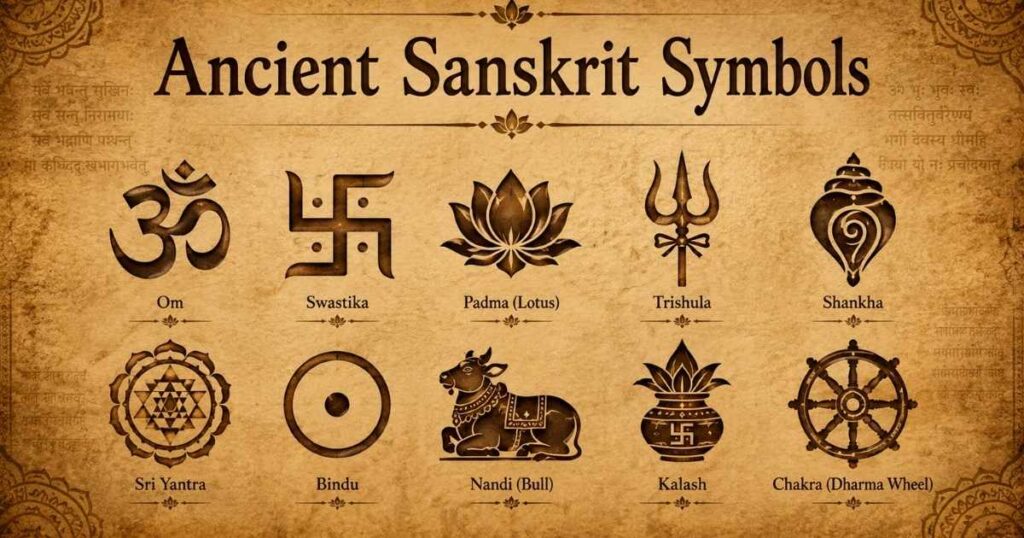
Some Sanskrit symbols date back over 2,000 years and were found carved into temple walls and ancient manuscripts long before writing systems like the modern alphabet existed. These include seals found in the Indus Valley Civilization, suggesting their roots may go even deeper in human history.
These ancient symbols weren’t decorations. They were tools for spiritual practice, education, and ritual. That ancient origin is exactly what gives them such timeless relevance today.
Read This: 86+ Powerful Life Symbols and Their Deep Meanings That Will Change Your Perspective
Sanskrit Symbol For Life
The Sanskrit symbol for life is closely tied to the concept of prana, which means life force energy in Sanskrit tradition. Prana is believed to flow through every living being, and certain symbols are used to honor, protect, and amplify that energy. These symbols appear in Ayurvedic healing, yoga philosophy, and meditation practices.
In the USA, you’ll find life-related Sanskrit symbols on yoga jewelry, meditation space décor, and wellness brand logos. They serve as daily reminders to live with purpose and gratitude.
Sanskrit Symbols For Breathe
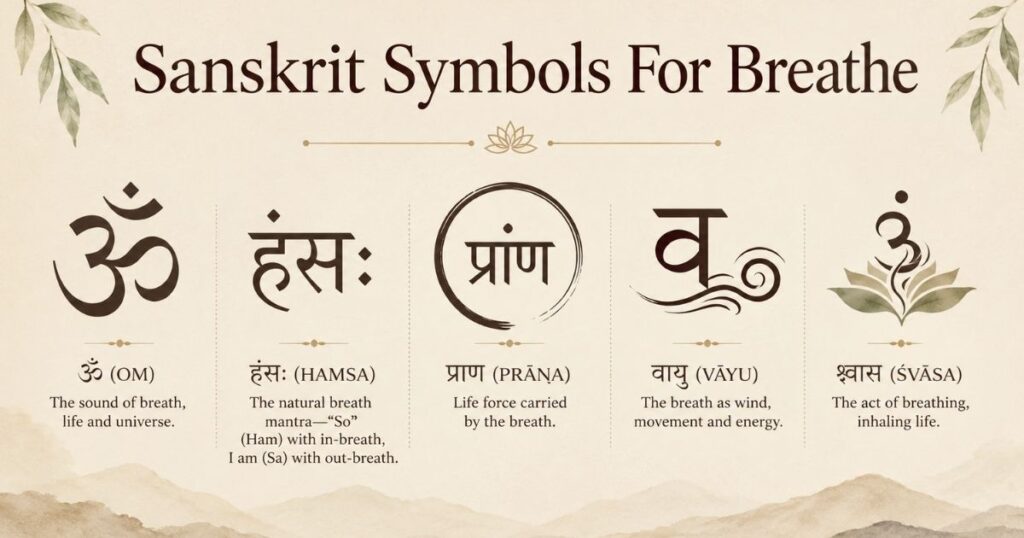
Breath is considered sacred in Sanskrit tradition. The pranayama system, which is the yogic science of breathing, uses specific symbols to represent breath control and mindful awareness. These symbols remind practitioners that the breath is always available as an anchor to the present moment.
Americans dealing with stress, anxiety, and burnout are increasingly drawn to breathe-related Sanskrit symbols for this exact reason. They’re simple, beautiful, and carry a message that genuinely helps.
Popular Sanskrit Symbols In Tattoos And Modern Design
Sanskrit symbols have become one of the most popular tattoo choices in the United States over the last decade. Their elegant visual forms combined with deep meanings make them perfect for people who want body art that says something real. The tattoo industry reported that spiritual and meaningful tattoos saw a 35% increase in demand between 2020 and 2024, with Sanskrit designs leading that trend.
Beyond tattoos, you’ll find Sanskrit symbols on yoga clothing, meditation apps, wellness product packaging, and home décor. Brands like Lululemon, Manduka, and dozens of mindfulness companies use these symbols because they communicate calm, purpose, and depth in a single image.
Sanskrit Symbols Tattoos
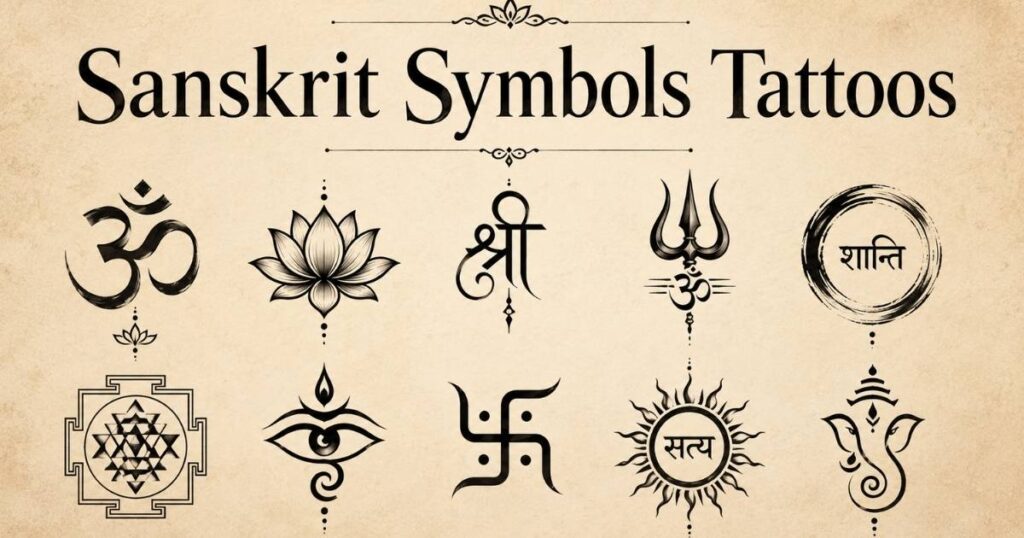
Sanskrit tattoos are trending in 2026 because people want body art with real meaning behind it. The most popular choices include the Om symbol, lotus, and individual chakra symbols. Before getting inked, it’s worth spending time researching what the symbol means and making sure the design is accurate. A poorly translated or drawn Sanskrit symbol can accidentally mean something completely different than intended. Always work with a tattoo artist who has experience with Sanskrit calligraphy.
Sanskrit Symbols And Meanings Tattoos
Popular Sanskrit tattoo meanings include strength, love, peace, protection, and personal transformation. People often choose symbols that reflect a turning point in their life, like overcoming illness, leaving a toxic relationship, or committing to a new spiritual path. The key is matching the symbol to your genuine intention. A meaningful tattoo chosen with care becomes something you’ll never regret.
Spiritual Sanskrit Symbols
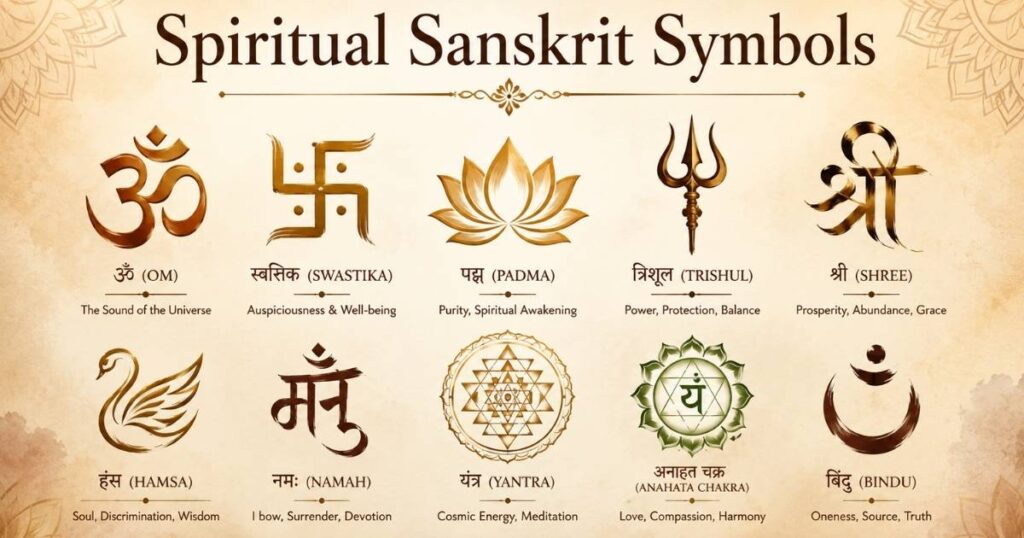
Spiritual Sanskrit symbols like Shri, Om, Aum, and Trishula are used in rituals, meditation, and sacred spaces. In the USA, yoga studios often display these symbols to create an atmosphere of focus and spiritual openness. They’re not just wall art. They’re intentional energy anchors. These symbols work best when you understand what you’re inviting into your space through them.
Sanskrit Symbols Text
Sanskrit symbols appear widely in digital design, social media aesthetics, and creative content. Many are available as Unicode characters, making them easy to use in posts, bios, and graphics. Their unique visual style adds a spiritual and artistic quality to any content. They’re especially popular in mindfulness content, yoga accounts, and wellness communities online.
Symbols Of Sanskrit
Sanskrit symbols connect directly to the Devanagari script, the writing system used for Sanskrit. What sets them apart from other writing systems is that their forms were intentionally designed to represent sound vibrations as visual shapes. This makes them visually and energetically distinct from any other symbolic system in the world. That’s a big part of why they feel so different when you look at them.
Sanskrit Symbols Meaning
The same Sanskrit symbol can carry slightly different meanings across Hindu, Buddhist, and Jain traditions. Context matters enormously. For example, the Om symbol holds a slightly different nuance in Tibetan Buddhism compared to Hindu Vedic tradition, though both acknowledge it as representing ultimate reality. Researching a symbol’s authentic meaning across traditions before using it shows respect and adds depth to your practice.
Sanskrit Symbol For Balance
The Sanskrit symbol for balance reflects the harmony between mind, body, and spirit that lies at the core of yoga philosophy. In Indian spiritual tradition, balance isn’t just physical. It’s about maintaining equilibrium between opposites: light and dark, action and stillness, giving and receiving. This symbol resonates deeply with Americans navigating the pressures of modern life.
Read This: 7+ Symbols of Virgo That Reveal Its True Personality And Hidden Power
Breathe Sanskrit Symbol
The breathe Sanskrit symbol is widely used in meditation studios, mental health spaces, and mindfulness communities across the USA. It’s a reminder that conscious breathing is one of the most powerful tools available for managing stress and anxiety. Simple, accessible, and always with you. For people struggling with anxiety, this symbol serves as a grounding visual cue.
Deep Symbolic Meaning
Sanskrit symbols work on three distinct levels: spiritual, psychological, and cultural. Spiritually, they’re believed to carry vibrational frequencies that align the mind with higher states of consciousness. Psychologically, their symmetry and form trigger calming responses in the brain. Culturally, they connect people to a living tradition thousands of years old.
Neuroscience research has shown that focusing on symmetrical, meaningful visual patterns can reduce cortisol levels and increase feelings of calm and focus. Sanskrit symbols, with their intentional geometric beauty, are perfectly suited for this kind of meditative focus. That’s not mysticism. That’s biology working alongside ancient wisdom.
Types / Variations of Sanskrit Symbols
| Symbol | Core Meaning | Common Use |
| Om | Universal sound, creation | Meditation, tattoos, yoga |
| Lotus | Purity, spiritual growth | Art, tattoos, décor |
| Swastika | Good fortune (original) | Hindu/Buddhist rituals |
| Chakra symbols | Energy centers | Healing, yoga, wellness |
| Mandala | Universe, wholeness | Art therapy, meditation |
Om Symbol
The Om (Aum) symbol is the most recognized Sanskrit symbol in the world. Visually, it consists of flowing curves representing three states of consciousness (waking, dreaming, and deep sleep) with a dot above representing the fourth state of pure awareness. It’s often called the sound of the universe because it was believed to be the first vibration of creation.
You’ll find Om on everything from meditation cushions to Hollywood movie sets, and its meaning holds up every time.
Lotus Symbol
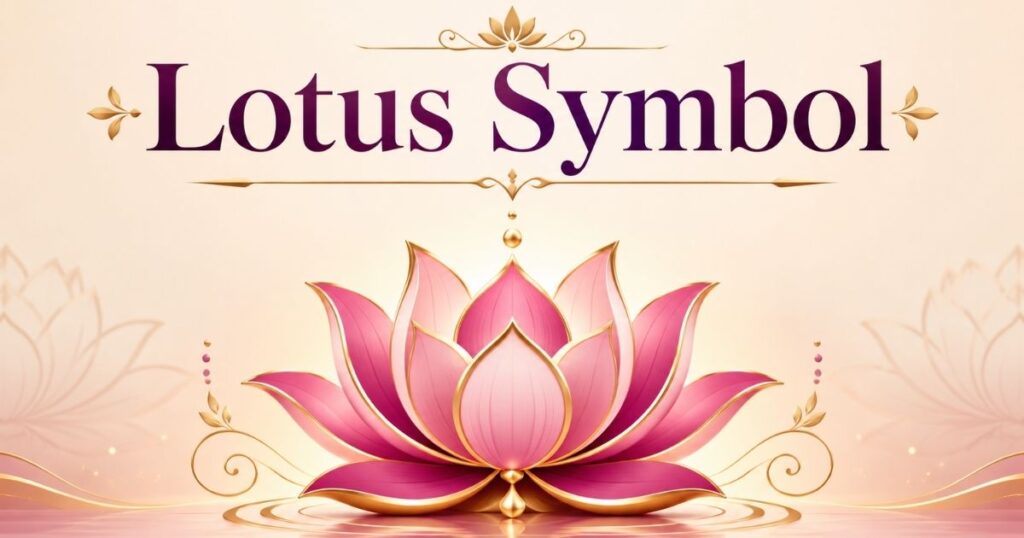
The lotus symbol represents purity and spiritual awakening. It grows in muddy water yet blooms into something breathtakingly beautiful, making it a perfect metaphor for human resilience and growth. It’s one of the most tattooed Sanskrit symbols in America for exactly this reason.
People who’ve come through hard times especially connect with the lotus. It says: beauty is possible even after struggle.
Swastika Symbol
The original Sanskrit swastika is a symbol of good fortune, prosperity, and well-being that predates its misuse by over 3,000 years. In Hindu and Buddhist communities worldwide, it remains a sacred and positive symbol. Understanding this distinction matters deeply, both for respecting the tradition and for honest historical education.
This is one of the clearest examples of why context shapes a symbol’s meaning completely.
Chakra Symbols
The seven chakra symbols represent energy centers in the human body, each with its own Sanskrit name, color, and meaning:
- Muladhara (Root Chakra): Stability and grounding
- Svadhisthana (Sacral Chakra): Creativity and emotion
- Manipura (Solar Plexus Chakra): Confidence and personal power
- Anahata (Heart Chakra): Love and compassion
- Vishuddha (Throat Chakra): Communication and truth
- Ajna (Third Eye Chakra): Intuition and wisdom
- Sahasrara (Crown Chakra): Spiritual connection and enlightenment
Chakra symbols are widely used in American yoga and healing communities as tools for emotional and physical wellness.
Mandala
A mandala is a complex geometric design that represents the universe and the cycle of life. In Sanskrit, “mandala” literally means “circle.” These intricate circular patterns are used as meditation tools, helping the mind focus and move into deeper states of awareness. In the USA, mandala art has become mainstream through tattoo culture, adult coloring books, and art therapy programs.
Sanskrit Symbols Across Cultures
Sanskrit symbols traveled from ancient India along trade routes to Tibet, Thailand, Indonesia, Cambodia, and eventually the Western world. Each culture added its own layer of interpretation while preserving the core meaning. Tibetan Buddhism transformed Om into elaborate mantra art. Balinese Hinduism wove Sanskrit symbols into textile designs and temple architecture.
In the modern USA, the yoga movement of the 20th century reintroduced these symbols to millions of Americans seeking spiritual depth outside organized religion. Today, they appear in everything from CrossFit studios to hospital meditation rooms, reflecting just how universally relevant these ancient symbols have become.
Sanskrit Symbols in Art, Movies & Pop Culture
Sanskrit symbols have made notable appearances in popular culture. Doctor Strange (2016) featured Sanskrit-inspired geometric patterns in its depiction of mystical dimensions. Eat Pray Love brought Om and meditation culture into mainstream American consciousness. Musician Katy Perry and celebrities like Rihanna have Sanskrit-inspired tattoos, bringing even more attention to these symbols.
In digital art, mandala designs are among the most shared visual content on Pinterest and Instagram. Streetwear brands use Sanskrit-inspired text and symbols to communicate a sense of mindfulness and depth. These aren’t just trends. They reflect a genuine cultural hunger for meaning and connection.
Spiritual & Dream Meaning of Sanskrit Symbols
Seeing a Sanskrit symbol in a dream is often interpreted as a message from the subconscious about spiritual realignment or personal transformation. Dreaming of Om suggests a need for inner peace and stillness. A lotus appearing in a dream typically signals that you’re moving through a difficult period and growth is coming.
In meditation, practitioners often use a single Sanskrit symbol as a focal point called a trataka, which is a Sanskrit word for steady gazing. Focusing on a symbol during meditation helps quiet mental chatter and deepen awareness. Many practitioners report that over time, these symbols become powerful inner anchors that bring instant calm and clarity.
Positive vs Negative Meaning
Every Sanskrit symbol carries positive potential, but misuse can create negative associations. Intention and context are everything. Used with understanding and respect, these symbols bring healing, inspiration, and spiritual growth. Used carelessly or commercially without understanding, they can become examples of cultural appropriation.
The swastika is the most dramatic example of how a profoundly positive symbol can be twisted through misuse. Education is the antidote. When people understand the original meaning and history, they can engage with these symbols in ways that honor their origins. Using Sanskrit symbols responsibly means learning before adopting.
Why Humans Are Attracted to This Symbol
Humans are hardwired to respond to visual patterns, and Sanskrit symbols tap directly into that wiring. Their symmetry, curves, and intentional forms trigger a natural sense of harmony and order in the brain. Psychologists call this “aesthetic resonance,” and Sanskrit symbols produce it consistently across cultures and demographics.
Beyond the visual response, there’s an emotional layer. These symbols feel ancient and timeless, like they’re holding a secret the modern world forgot. That mystery draws people in. And once you start learning what they mean, the connection deepens. A symbol becomes a personal anchor, a daily reminder of something bigger than the noise of everyday life.
FAQ’s
What is the most powerful Sanskrit symbol and why?
The Om symbol is widely considered the most powerful because it represents the sound of the universe and the foundation of all existence in Sanskrit tradition.
What Sanskrit symbol means strength?
The Trishula (trident of Shiva) and certain Bija mantras are associated with inner strength and courage in Sanskrit tradition.
What Sanskrit symbol represents love?
The Anahata (Heart Chakra) symbol represents love, compassion, and emotional openness in Sanskrit and yogic philosophy.
Are Sanskrit symbols only used in religion?
No. While many have religious origins, Sanskrit symbols are widely used today for meditation, wellness, art, tattoos, and personal inspiration outside of any religious context.
Can non-Hindus use Sanskrit symbols respectfully?
Yes, but with awareness. Learning the symbol’s meaning, using it with genuine intention, and avoiding purely commercial or trivial use is the key to respectful engagement.
What Sanskrit symbol is best for a tattoo?
The Om symbol and lotus are the most popular tattoo choices because of their universal spiritual meaning and elegant visual design.
What does the Om symbol actually mean?
Om represents the primordial sound of the universe, the unity of mind, body, and spirit, and the three states of consciousness (waking, dreaming, deep sleep).
How do I know if a Sanskrit symbol is being used correctly?
Research its meaning across multiple traditions, consult reputable sources, and if possible, speak with a Sanskrit scholar or experienced practitioner before using it.
Are Sanskrit symbols and Hindu symbols the same thing?
Not exactly. While many Sanskrit symbols originated in Hinduism, they were also adopted by Buddhism and Jainism, so they belong to a broader spiritual tradition beyond any single religion.
What Sanskrit symbol means protection?
The Swastika in its original Sanskrit context represents protection, good fortune, and well-being, though it’s important to understand its full cultural history before using it.
Conclusion
Sanskrit symbols are not relics of the past. They’re living tools for the present. Whether you’re drawn to the Om symbol during morning meditation, considering a lotus tattoo, or simply curious about what these ancient signs really mean, exploring them opens a door to thousands of years of human wisdom.
The most important thing you can do is approach these symbols with curiosity and respect. Learn before you adopt. Understand before you display. When you do that, a Sanskrit symbol stops being just an image and starts becoming something genuinely meaningful in your life.
In 2026 and beyond, these ancient symbols still have something real to offer. You just have to take the time to listen.

Hi, I’m Ethan Brooks, the admin of SymbolHubz.com. Passionate about symbols, emojis, kaomojis, and text art, helping users discover creative ways to express themselves online.