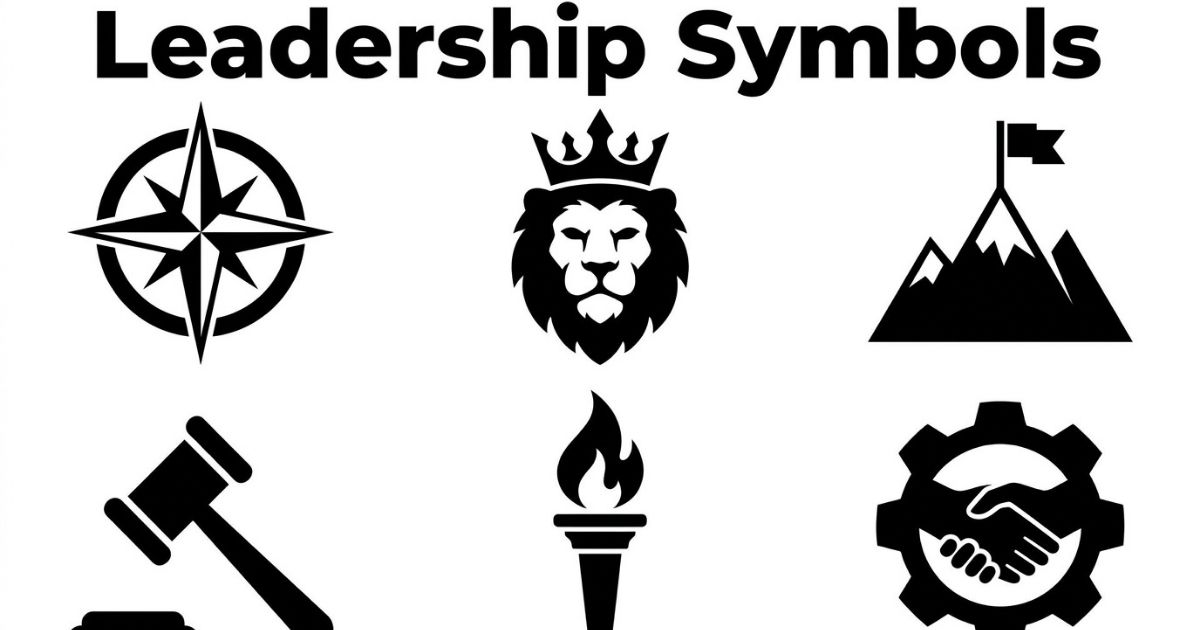

Leadership symbols are visual and cultural signs that humans have used for thousands of years to communicate authority, inspire trust, and define who guides the group. From the golden crowns of Egyptian pharaohs to the eagle on the American presidential seal, these symbols haven’t disappeared. They’ve evolved. And if you look closely, you’ll find them everywhere in modern life, from corporate logos to military badges to the way a CEO arranges their office.
This article breaks down the most powerful leadership symbols in history, explains what they mean, and shows you why they still matter today.
What Are Leadership Symbols?
Leadership symbols are objects, images, animals, or signs that visually represent authority, guidance, and the responsibility of leading others. They make an abstract idea, the idea that someone has earned the right to lead, concrete and instantly recognizable.
Humans didn’t always have written language, complex laws, or formal institutions. Long before those existed, symbols did the heavy lifting. A chief wore certain markings. A king held a specific staff. A general wore a distinctive helmet. These visual cues told everyone around them, instantly and without a word, who was in charge.
What makes leadership symbols so powerful isn’t just tradition. It’s psychology. Research in behavioral science shows that the human brain processes symbolic information faster than text and connects it directly to emotion. When you see a crown, your brain doesn’t need a paragraph of explanation. It already knows what it means. That’s exactly why leadership symbols have survived centuries of cultural change.
Leadership Symbols And Meanings Across Cultures And History
Every major civilization created its own system of leadership imagery and authority symbols. The details differed, but the purpose was always the same: to make leadership visible, believable, and emotionally resonant.
Symbols Of Leadership With Meaning
Some symbols carry meanings so universal that they transcend cultural boundaries. Here’s a quick reference for the most recognized ones:
| Symbol | Core Meaning | Where It Appears |
| Crown | Authority and responsibility | Monarchies, logos, tattoos |
| Torch | Guidance and enlightenment | Education, ceremonies, brands |
| Compass | Vision and direction | Military, personal branding |
| Eagle | Power and higher perspective | National seals, military emblems |
| Lion | Courage and natural command | Heraldry, flags, tattoos |
The torch is particularly interesting because it carries two meanings at once. It represents the leader who lights the path and the act of passing leadership forward to the next generation. That’s why you see it in Olympic ceremonies and university crests alike.
Symbols Of Leadership In Education
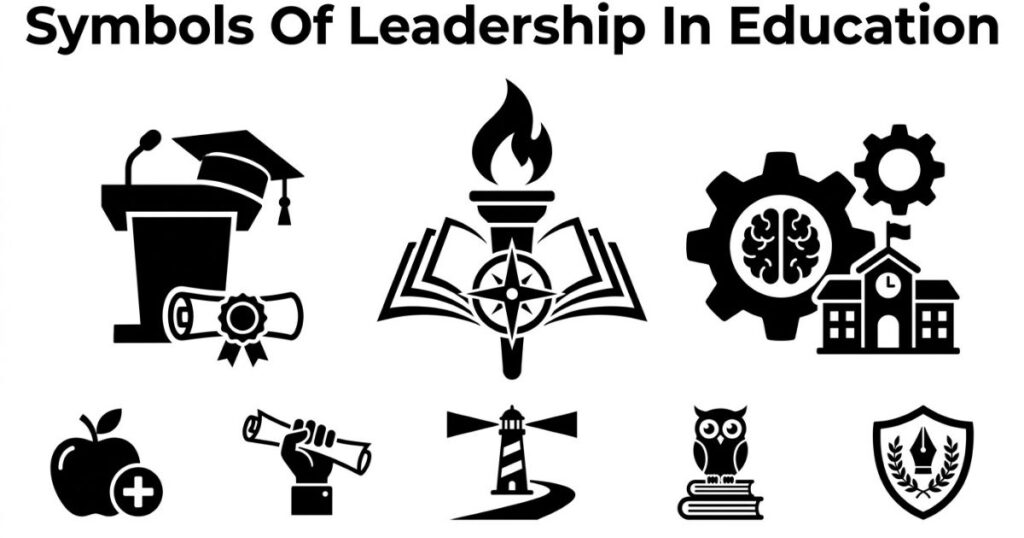
In academic settings, leadership symbols in education tend to focus on the transfer of knowledge rather than raw power. The owl represents wisdom, borrowed from ancient Greek tradition. The key symbolizes access to knowledge that unlocks potential. The open book signals transparency and continuous learning.
Look at the crests of Harvard, Yale, or the University of Michigan and you’ll find these symbols embedded in their official imagery. These schools aren’t just picking pretty designs. They’re communicating what kind of leadership they produce and what values guide their institutions.
Symbols Of Leadership
Broadly speaking, symbols of leadership reflect what a society values most in its leaders at any given moment. Warrior cultures valued the sword and the shield. Agricultural societies elevated the staff. Democratic cultures gravitated toward the scales of justice and the open hand. Understanding which symbols a culture chooses tells you a great deal about what that culture expects from its leaders.
Visual And Creative Leadership Symbol Designs
Symbol Of Leadership Images
A powerful symbol of leadership image doesn’t need words. Think of the silhouette of a lone figure standing at a mountain summit, or an eagle mid-flight against an open sky. These images communicate challenge, achievement, and vision all at once. In digital content, presentations, and book covers, leadership images work because they activate emotion before the reader processes a single word.
Pictures Of Leadership Symbols
Pictures of leadership symbols show up constantly in political campaigns. Barack Obama’s 2008 “Hope” poster is one of the most studied examples in modern history. The image used bold color, upward gaze, and the word “Hope” to create an instant visual symbol of progressive leadership. It became iconic not because it showed a crown or a scepter, but because it captured the emotional essence of what those older symbols always represented.
Leadership Symbols Images
When designers choose leadership symbols images for professional use, the most effective choices tend to share three qualities: they’re simple, they’re bold, and they work in multiple sizes. A strong leadership image communicates the same idea whether it’s on a billboard or a business card.
Leadership Symbols Black And White
Black and white leadership symbols carry a particular kind of authority. Removing color forces the viewer to focus entirely on form and shape. That’s why official seals, legal documents, and military insignia often appear in black and white. The contrast feels serious, permanent, and trustworthy. Many of the world’s most respected institutions use black and white versions of their emblems for exactly this reason.
Leadership Symbols Clip Art
For educators, bloggers, and content creators, leadership symbols clip art offers a practical way to illustrate leadership concepts visually. The most commonly used clip art symbols include crowns, stars, eagles, torches, and laurel wreaths. When used thoughtfully, these simple graphics make leadership ideas easier to grasp, especially for younger audiences or visual learners.
Leadership Symbol Designs In Art And Personal Expression
Leadership Symbol Drawing
Throughout history, leadership symbol drawing appeared in royal manuscripts, cathedral ceilings, and warrior shields. Artists used these drawings to communicate power to audiences who couldn’t read. Today, hand-drawn leadership symbols appear in motivational artwork, journal covers, and digital illustration. The lion, the mountain, and the compass remain the most popular subjects because they balance visual impact with clear symbolic meaning.
Read More: 20+ Hidden Symbols of Rebirth You See Every Day but Never Notice
Leadership Symbol Tattoo
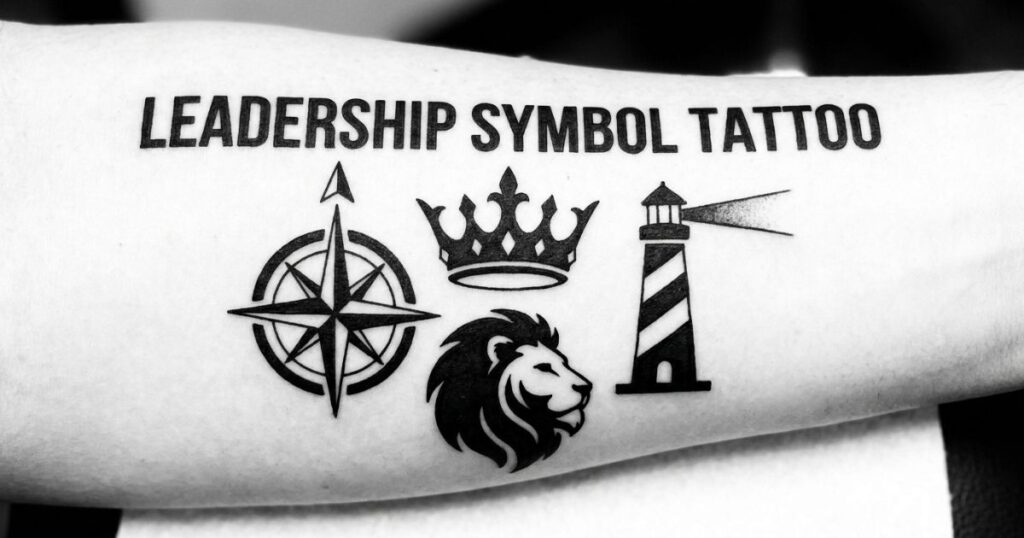
Leadership symbol tattoos are chosen by people who want their values visible on their skin. The most popular choices include the lion (courage), the compass (direction and purpose), the crown (self-mastery and earned authority), and the anchor (stability under pressure). These tattoos aren’t just decorative. They’re personal declarations of leadership philosophy. Many veterans, executives, and athletes choose these symbols specifically because of what they communicate about how they choose to live and lead.
Logo Leadership Symbols
The best logo leadership symbols do something remarkable: they compress complex values into a single image. The eagle in the US Army logo, the shield in the NFL logo, and the crown in the Rolex emblem all signal authority, excellence, and earned trust without using a single word. Designers who understand leadership symbolism know that the strongest logos borrow from thousands of years of cultural meaning rather than inventing something entirely new.
Historical And Cultural Leadership Symbols
Ancient Symbols Of Leadership
Some of the oldest ancient symbols of leadership come from Mesopotamia, where cylinder seals were used to mark a ruler’s identity and divine authority. In Rome, the fasces (a bundle of rods bound around an axe) represented the collective strength of Roman authority. These symbols weren’t chosen randomly. Each one communicated a specific message about the nature of legitimate power.
Interestingly, the fasces still appears today on the back of the American Mercury dime and in the U.S. House of Representatives chamber, a reminder that ancient leadership emblems continue to shape modern governance.
Ancient Leadership Symbols
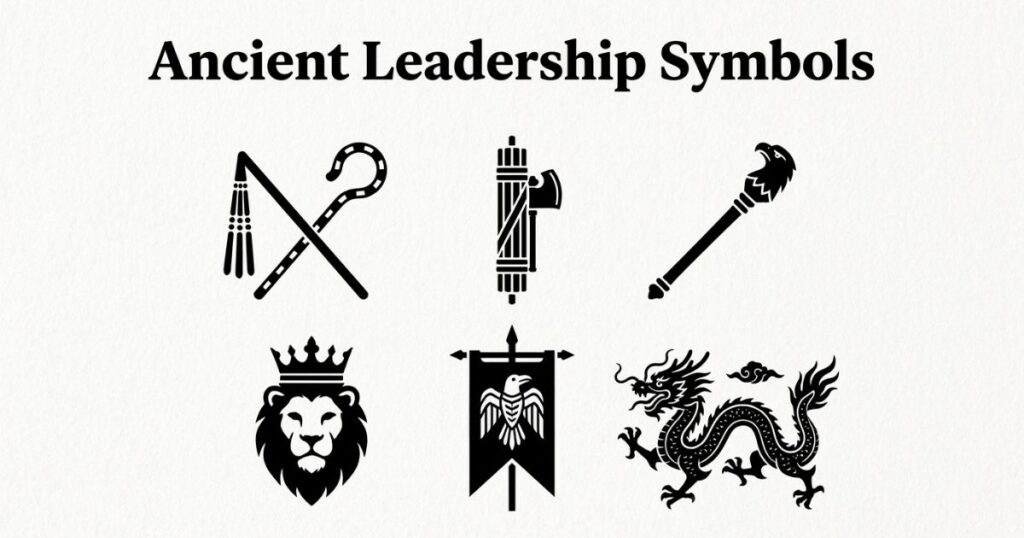
One of history’s most powerful moments involving ancient leadership symbols happened in 1783 when George Washington refused to be made king after the Revolutionary War. That refusal became its own symbol of democratic leadership, arguably more powerful than any crown could have been. The Greek laurel wreath carried a similar message: it was awarded for achievement, not inheritance. Leadership had to be earned.
The Celtic knot represented something different: the endless, interconnected nature of a leader’s responsibilities. It had no beginning and no end, suggesting that true leadership is never finished.
Coat Of Arms Leadership Symbols
Coat of arms leadership symbols emerged in medieval Europe as a practical solution to a real problem. Knights in full armor looked identical on the battlefield. Heraldic symbols on shields and banners let soldiers identify their leaders instantly. Over time, these designs became elaborate visual languages communicating family lineage, military victories, and moral values.
Every element mattered. A red background signaled military strength. A gold lion indicated courage and royalty. A blue chevron represented protection. Many universities, cities, and organizations still use coat of arms designs today because they carry centuries of visual authority that modern design rarely matches.
Objects And Things That Represent Leadership
Objects That Represent Leadership
The most recognized objects that represent leadership are the crown, the scepter, the throne, the sword, the torch, and the compass. What these objects have in common is that they’re all tools. A crown marks the leader. A scepter extends their reach. A throne elevates them. A sword defends the group. A torch lights the way. A compass sets the direction. Leadership, these objects suggest, is fundamentally about function, not decoration.
Objects That Represent Leadership Styles
Different objects that represent leadership styles reveal different philosophies of leading. A compass aligns with visionary leadership because it points toward a destination others can follow. A bridge represents collaborative leadership, connecting people across divides. A shield signals protective leadership. A scale reflects ethical leadership committed to fairness. These aren’t just metaphors. They’re the actual objects that leaders throughout history have carried, built, and displayed.
Items That Represent Leadership
Beyond the traditional royal regalia, everyday items that represent leadership include the podium, the head chair at a conference table, and the corner office. These spatial and physical cues are modern leadership symbols. Research in organizational psychology shows that seating position alone affects how much authority others attribute to a person in a meeting. Symbolism is built into the architecture of modern leadership.
Things That Symbolize Leadership
In nature, several things that symbolize leadership have resonated across cultures for centuries. The mountain represents the challenge leaders must climb and the perspective they gain at the summit. The oak tree stands for strength that deepens with age. The river suggests constant forward movement even around obstacles. These natural symbols appeal to something instinctive in human beings.
Things That Represent Leadership
Color is one of the most underrated things that represent leadership. Purple has signaled royalty and authority since ancient Phoenicia, where purple dye was extraordinarily rare and expensive. Gold represents excellence and achievement. Blue builds trust, which is why it dominates political branding and corporate identity. Red projects power and urgency. Modern leaders choose their colors carefully because these associations run deep in the human psyche.
Leadership Symbols In Power, Strength, And Control
Leader Symbols
Leader symbols specifically mark an individual as the person in charge, distinct from the broader group. Military stars on a uniform, the presidential podium’s seal, and the CEO’s reserved parking spot all function as leader symbols. They’re not about vanity. They’re about clarity. Groups function better when leadership is visible and unambiguous.
Symbol Of A Leader
The most memorable symbols of a leader are often personal and unexpected. Churchill’s two-fingered V-sign became a global symbol of defiant leadership during World War II. Gandhi’s spinning wheel, called the charkha, became a powerful symbol of a leader who rejected imperial consumption and chose self-reliance. Napoleon deliberately cultivated the image of the hand tucked into the jacket as part of his personal leadership iconography. These weren’t accidents. They were intentional acts of leadership symbolism.
Symbol Of Leader
Across cultures, the symbol of leader varies significantly. In Japan, the chrysanthemum represents imperial authority. In China, the dragon has long served as the emperor’s personal symbol, representing cosmic wisdom and divine power. In Western tradition, the crown remains the dominant symbol of leader status. Understanding these differences matters enormously in global leadership contexts.
Symbol For Leadership
The compass has emerged as arguably the most versatile modern symbol for leadership. It doesn’t represent inherited power or military dominance. It represents orientation, the ability to find true north and guide others toward a shared destination. That’s why you’ll find it in leadership development programs, executive coaching brands, and military unit patches alike.
Symbols For Leadership
Beyond the compass and crown, effective symbols for leadership include the anchor (stability), the rising sun (new beginnings and optimism), the open hand (accessibility and servant leadership), and the mountain peak (achievement and perspective). Each one communicates a different dimension of what great leadership looks like.
Symbols That Represent Leadership
Symbols that represent leadership earn their meaning over time through repetition and cultural reinforcement. When enough people in enough contexts associate an image with authority and guidance, that image becomes a genuine leadership symbol. That’s why some symbols last millennia and others fade within a generation.
Leadership Symbolism
Leadership symbolism goes deeper than imagery. Carl Jung identified four archetypes that map directly to leadership roles: the King (order and authority), the Warrior (courage and action), the Sage (wisdom and guidance), and the Servant (humility and care). Every major leadership symbol throughout history connects to one of these archetypes. Understanding which archetype a symbol represents helps leaders choose the right imagery for their personal brand and organizational identity.
Symbolism For Leadership
Modern leaders who understand symbolism for leadership use it strategically. The way a CEO dresses, the design of their company’s headquarters, the words they repeat in speeches, and the images in their marketing materials all function as leadership symbols. Steve Jobs’ black turtleneck was a leadership symbol as deliberate as any medieval king’s crown. It communicated simplicity, focus, and a rejection of corporate conformity.
Specialized Leadership Symbol Categories
Symbols That Represent Control
Symbols that represent control walk a fine line between authority and oppression. The gavel represents judicial control used in service of justice. The scepter represents royal control ideally used in service of the people. The problem arises when control symbols become disconnected from service. History shows repeatedly that when symbols of authority stop representing responsibility and start representing privilege alone, they lose legitimacy and sometimes trigger revolution.
Strength Leadership Symbols
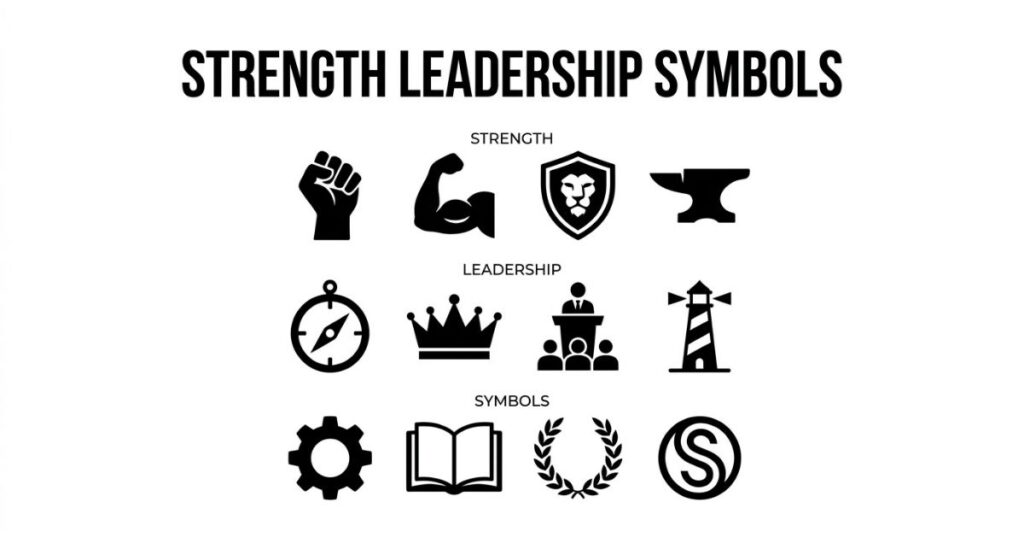
Strength leadership symbols appear prominently in sports, military culture, and corporate branding. The lion is the most universal, appearing on more national flags and institutional crests than any other animal. The mountain represents strength through endurance rather than force. The bull signals raw power and economic strength, which is why Wall Street chose it as its defining image.
Military Leadership Symbols
Military leadership symbols are among the most psychologically sophisticated ever designed. A general’s stars don’t just indicate rank. They trigger an automatic deference response in observers. Research by Stanley Milgram demonstrated how powerfully symbolic authority, including uniforms and insignia, influences human behavior. Military leadership emblems like eagles, crossed swords, and shields communicate hierarchy, honor, and the gravity of command instantly and universally.
Servant Leadership Symbols
Servant leadership symbols deliberately invert traditional authority imagery. Where a crown elevates, the open hand offers. Where a sword commands, the bridge connects. Where a throne separates, the circle includes. Organizations that embrace servant leadership often choose symbols like trees (whose roots serve the whole ecosystem), water (which flows to wherever it’s needed), and open hands (which give rather than take). These leadership symbols reflect a fundamentally different philosophy about the purpose of being in charge.
Leadership Symbols Animals
Leadership symbols animals tap into something primal in human psychology. We instinctively understand animal behavior and project those qualities onto human leaders.
- Lion: Courage, group protection, natural authority
- Eagle: Vision, independence, elevated perspective
- Wolf: Strategic intelligence, loyal teamwork, adaptability
- Elephant: Wisdom, long memory, calm strength
- Horse: Freedom, drive, and willingness to carry others forward
These animals appear in national emblems, military unit patches, sports team names, and personal tattoos because their leadership qualities are universally understood across cultures and languages.
Leadership Symbol Media And Visual Resources
Symbol Of Leadership Images
The most effective symbol of leadership images for digital content share three qualities: they’re emotionally resonant, visually simple, and culturally legible. Stock photo libraries are full of generic “leadership” images showing people on mountaintops or pointing at whiteboards. The symbols that actually communicate leadership authority are the ones rooted in history and cultural tradition.
Leadership Symbols And Meanings
Here’s a quick reference guide to ten essential leadership symbols and meanings every leader should know:
- Crown: Ultimate authority and the burden it carries
- Eagle: Vision beyond what ordinary people see
- Lion: Courage that others draw confidence from
- Compass: Direction when the path is unclear
- Torch: Inspiration and the transfer of wisdom
- Shield: Protection of those who follow
- Anchor: Stability when circumstances are chaotic
- Mountain: The challenge worth climbing
- Oak Tree: Strength that grows deeper with time
- Open Hand: Service as the foundation of leadership
Leadership Symbols Clip Art
Quality leadership symbols clip art works best in educational materials, presentations, and training documents. Simple, high-contrast graphics communicate leadership concepts quickly to diverse audiences. When choosing clip art for professional use, prioritize symbols with clear cultural meaning over abstract designs that require explanation.
Deep Symbolic Meaning of Leadership Symbols
Spiritual Meaning
Spiritually, leadership symbols have almost always carried divine meaning. Egyptian pharaohs wore the double crown to represent their role as the bridge between heaven and earth. Medieval European kings used the orb and scepter to represent God’s authority flowing through the monarch. Even modern presidential inaugurations include symbolic religious elements, swearing on a Bible, facing east toward the rising sun, placing a hand over the heart.
The spiritual meaning of leadership symbols suggests that throughout human history, people have believed true leadership carries a moral and even cosmic responsibility. Leaders weren’t just managers. They were expected to be worthy.
Psychological Meaning
Psychologically, leadership symbols perform a critical function: they reduce anxiety. When people face uncertainty, visible symbols of authority signal that someone competent is in control. This connects to Terror Management Theory, which suggests humans use cultural symbols to manage the anxiety that comes from awareness of their own mortality and vulnerability.
Milgram’s famous obedience experiments showed that symbolic markers of authority, including uniforms, titles, and insignia, significantly increase compliance even when the authority itself is questionable. Understanding this dynamic is essential for both ethical leadership and critical followership.
Cultural Meaning
Culturally, leadership symbols define social hierarchy and make complex power structures navigable. The same symbol can carry radically different meanings across cultures. In Western tradition, the dragon represents danger and chaos. In Chinese culture, the dragon is the supreme symbol of leader authority, representing wisdom, cosmic balance, and divine power. A leader operating across cultural boundaries needs to understand these differences deeply.
Types and Variations of Leadership Symbols
Crown
The crown is the most universally recognized leadership symbol on earth. Its circular shape represents continuity with no beginning and no end. Its elevation above the head places the leader symbolically closer to the divine. Gold communicates rarity and excellence. Jewels represent the diverse people and responsibilities the ruler carries. Modern brands from Rolex to Burger King use crown imagery because thousands of years of cultural conditioning make its meaning immediately clear.
Lion
The lion has served as a leadership symbol across Africa, Europe, the Middle East, and Asia for over 5,000 years. It appears on the flags of Ethiopia, England, Sri Lanka, and Bulgaria. It guards the entrances of banks, libraries, and government buildings worldwide. The lion represents the kind of leadership that is both powerful and protective, fierce when necessary but fundamentally oriented toward the safety of the pride.
Eagle
The eagle became a dominant leadership symbol in the Roman Empire, where the aquila (eagle standard) was the most sacred object a Roman legion carried. Losing it in battle was considered a catastrophic disgrace. America’s adoption of the bald eagle carried this ancient symbolism forward, though the choice was controversial. Benjamin Franklin famously preferred the turkey. The eagle won because it projected exactly the qualities the new nation wanted to embody: vision, independence, and dominance.
Throne
The throne is a masterclass in leadership symbolism through architecture. Every design choice communicates authority. Height elevates the leader above the room. Size creates physical dominance. Ornamentation signals wealth and cultural sophistication. The back of the throne protects the leader from behind, allowing full attention to those who approach from the front. Even today, the head chair at a boardroom table and the raised stage at a conference are modern expressions of the same ancient logic.
Staff or Scepter
The staff is one of the oldest authority symbols in human history. Moses carried one. Egyptian pharaohs held the crook as a symbol of shepherding their people. Buddhist monks, tribal chiefs, and Christian bishops have all used staff imagery to communicate leadership and authority. Today’s ceremonial maces in legislative chambers and the conductor’s baton in an orchestra are direct descendants of this tradition.
Flag
The flag transformed leadership from a personal symbol to a collective one. It says, “we follow this together.” Flags gave armies a visible rallying point in the chaos of battle. They gave nations a shared identity that transcended any individual leader. The most powerful flags in history created emotional bonds so strong that soldiers died rather than let them fall. That level of symbolic power is almost unparalleled in human culture.
Leadership Symbols Across Cultures
Ancient Egypt
Egyptian leadership symbols were among the most sophisticated ever developed. The double crown merged the white crown of Upper Egypt and the red crown of Lower Egypt into a single headpiece representing unified authority. The crook represented the pharaoh as shepherd of the people. The flail represented the power to thresh out abundance. Together, they communicated that the pharaoh both cared for and empowered those they governed.
Ancient Greece
Greece contributed something revolutionary to leadership symbolism: the idea that symbols could be earned rather than inherited. The laurel wreath was awarded to victors, philosophers, and military heroes based on achievement. The olive branch of Athena represented wisdom applied in service of peace. These symbols reflected Greek democratic values, that leadership qualities like wisdom and courage mattered more than bloodline.
China
Chinese cultural leadership symbols centered on the emperor as the “Son of Heaven,” a cosmic figure responsible for maintaining harmony between the human and divine worlds. The dragon represented this cosmic authority with scales, claws, and breath that combined the powers of all animals. The color yellow was exclusively reserved for the emperor. Even the arrangement of the imperial palace was a giant leadership symbol, with its orientation, proportions, and gates all communicating celestial authority.
Medieval Europe
Medieval European historical leadership symbols were primarily designed to establish and defend hereditary legitimacy. The crown, the orb, the scepter, the throne, and the coat of arms worked together as a complete symbolic system. Each element reinforced the others. Breaking any part of the system, losing a battle standard, having a crown stolen, being denied proper coronation, was considered a serious blow to a ruler’s legitimate authority.
Modern Society
Today’s leadership symbols are logos, uniforms, titles, and architecture. The Apple logo, the Oval Office, the general’s stars, and the CEO’s corner office all function exactly as ancient leadership symbols did: they make authority visible, believable, and emotionally compelling. The difference is that modern leadership symbols are increasingly earned and chosen rather than inherited and imposed.
Leadership Symbols in Art, Movies and Pop Culture
Leadership symbols in pop culture do something ancient symbols could never do: they reach billions of people simultaneously. The Iron Throne in Game of Thrones became one of the most discussed leadership symbols of the 21st century because it made the corrupting weight of power viscerally physical. Sitting on it looked uncomfortable because ruling, the show suggested, is supposed to be uncomfortable.
Marvel’s Captain America shield is a brilliant piece of leadership symbolism. It’s a defensive weapon, not an offensive one. It protects rather than attacks. It reflects danger back to its source. It was designed to communicate servant leadership through its very function.
In hip-hop culture, the crown has been reclaimed as a symbol of self-made authority. Artists like Notorious B.I.G. and Jay-Z used crown imagery to assert leadership and authority built through talent and determination rather than inheritance. Fashion contributes too: the power suit, the minimalist CEO wardrobe, and the military-inspired jacket all function as deliberate leadership visual symbols that communicate competence and control before a word is spoken.
Spiritual and Dream Meaning of Leadership Symbols
Dreaming of leadership symbols often reflects something happening in your inner life regarding authority, responsibility, and confidence. A crown appearing in a dream frequently signals that you’re ready for a greater leadership role, or that you’re wrestling with the weight of one you already carry. A broken scepter or fallen crown may represent fear of losing authority or self-doubt about your leadership qualities.
Carl Jung believed these dream symbols connect to universal archetypes stored in the collective unconscious. The King archetype in dreams represents order and responsibility. The Warrior represents courage and decisive action. The Sage represents wisdom and guidance. When these figures appear in dreams, they’re often calling attention to qualities you need to develop or express more fully.
Spiritually, most major traditions embed leadership symbolism deeply in their practices. The bishop’s staff, the imam’s position at the front of prayer, the chief’s ceremonial headdress, and the shaman’s ritual objects all communicate spiritual leadership authority in their respective traditions. These aren’t decorations. They’re functional symbols that activate respect, focus, and collective intention.
Positive vs Negative Meaning of Leadership Symbols
Positive Meaning
At their best, leadership symbols communicate protection, inspiration, wisdom, stability, and earned trust. They give people something to rally around during uncertainty. They make complex hierarchies navigable. They remind both leaders and followers of the values and responsibilities that legitimate authority carries. A well-chosen symbol of leadership can unite diverse groups, sustain motivation through hardship, and create identity that outlasts any individual leader.
Negative Meaning
The same symbols that inspire loyalty can signal tyranny when used without integrity. Authoritarian regimes throughout history have weaponized leadership symbols to manufacture consent and suppress dissent. The swastika, originally an ancient Sanskrit symbol of well-being and leadership strength, was permanently transformed by Nazi Germany into a symbol of genocide. This transformation illustrates how leadership symbolism is never neutral. It always reflects the values of whoever wields it.
Control symbols like the iron fist, the surveillance camera, and the secret police badge represent symbols that represent control divorced from service. When leaders prioritize the symbol of authority over the responsibility it carries, they corrupt both the symbol and themselves. Understanding the dark side of leadership symbols is as important as appreciating their power.
Why Humans Are Drawn to Leadership Symbols
The answer starts in evolutionary psychology. For most of human history, groups with clear, visible leadership survived better than those without it. Our brains evolved to quickly identify and respond to signals of competent authority because doing so increased survival odds. Leadership symbols are a technology that works with this instinct rather than against it.
There’s also a cognitive efficiency argument. Complex social structures require constant negotiation about who decides what. Symbols short-circuit that negotiation. When everyone recognizes what a uniform, a title, or an emblem means, the group can function with less friction and conflict. Symbols reduce the cognitive load of social organization.
At the deepest level, people are drawn to leadership symbols because they project both their hopes and their fears onto them. A crown doesn’t just represent the king. It represents your hope that someone wiser and stronger is protecting you. It also represents your fear that power might be abused. This dual nature is why leadership symbols generate such intense emotional responses, why people fight for them, topple them, revere them, and sometimes destroy them.
Understanding leadership symbolism makes you a sharper reader of the world around you. When you notice how a politician arranges their backdrop, how a CEO designs their office, or how a brand chooses its logo, you’re seeing thousands of years of leadership symbol logic at work in real time.
FAQ’s
What is the most universal leadership symbol across cultures?
The crown is the single most recognized leadership symbol globally, appearing in some form across Egyptian, Greek, Roman, European, Asian, and African traditions.
What animal best represents leadership and why?
The lion is the most universally used leadership symbol animal because it combines courage, protective instinct, and natural authority in a way humans have admired across every continent.
What color symbolizes leadership most powerfully?
Purple has historically been the strongest leadership color due to its rarity and association with royalty. Gold signals excellence. Blue builds trust and is widely used in political and corporate leadership branding.
What does a compass symbolize in leadership?
The compass represents leadership vision and direction, specifically the ability to navigate uncertainty and guide others toward a clear destination.
Can leadership symbols appear in dreams, and what do they mean?
Yes. Dreaming of a crown often signals readiness for greater responsibility. A broken leadership symbol in a dream may reflect self-doubt or fear of losing authority.
What tattoo symbol best represents personal leadership?
The lion, compass, crown, and anchor are the most popular leadership symbol tattoo choices because each communicates a core leadership quality: courage, direction, earned authority, and stability.
Are leadership symbols always positive in meaning?
No. The same symbols of authority that inspire loyalty can represent tyranny and oppression when used without integrity or ethical responsibility.
What is the Japanese or Chinese symbol for leadership?
In Chinese tradition, the dragon is the supreme symbol of leader authority. In Japan, the chrysanthemum represents imperial leadership and is still used on the imperial seal today.
Conclusion
Leadership symbols are not relics of the past. They’re active forces shaping how trust is built, authority is communicated, and groups are organized right now, in boardrooms, on battlefields, in classrooms, and on social media feeds. From the ancient Egyptian crook to the startup founder’s minimalist logo, the logic is the same: make leadership visible, make it meaningful, and give people something worth following.
The most important thing you can take from understanding these symbols is awareness. When you see a flag, a badge, a logo, or even the way someone stands at a podium, you’re watching thousands of years of leadership symbolism at work. That awareness makes you a more conscious follower and, if you’re leading others, a more intentional and powerful leader.
Start noticing the symbols around you. You’ll be surprised how much they’ve already been shaping you.

Hi, I’m Ethan Brooks, the admin of SymbolHubz.com. Passionate about symbols, emojis, kaomojis, and text art, helping users discover creative ways to express themselves online.