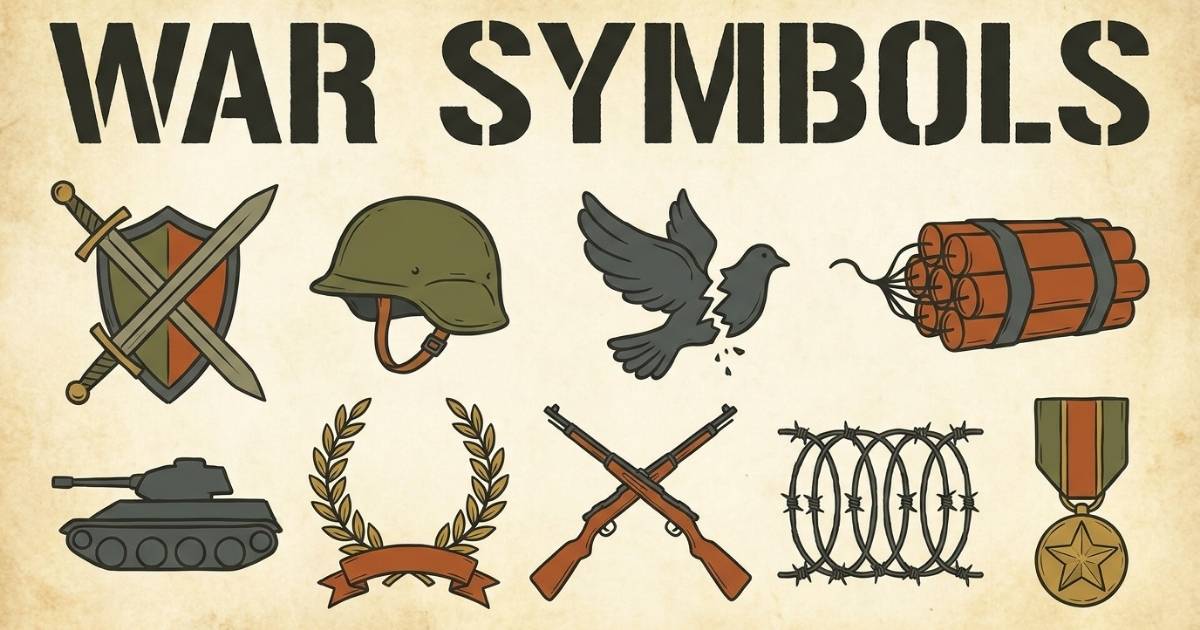

War symbols have shaped human communication for thousands of years. From cave paintings to modern military insignia, these icons carry deep meaning across cultures.
Today, people use war symbols in texts, social media captions, gaming usernames, and design projects. This guide covers their history, meanings, and ready to use copy and paste versions.
Whether you need a quick emoji for a chat or want to understand ancient battle symbols, this article gives you everything in one place.
What Are War Symbols?
War symbols are visual marks or emojis that represent conflict, battle, power, or military strength. They include weapons, flags, shields, and modern digital emojis.
People use these symbols to express strength, danger, competition, or historical pride. They appear in literature, art, tattoos, and even casual online conversations.
Some symbols are ancient, carved into stone or painted on shields. Others are digital creations designed for smartphones and social platforms.
Common categories of war symbols include:
- Weapon icons such as swords, spears, and guns
- Protective symbols like shields and armor
- National and military flags
- Emoji representations used in texting
See Also: One Piece Symbols & Emojis
History of War Symbols
Early humans used simple markings to represent hunting and tribal conflict. These images later evolved into organized battle symbols used by ancient armies.
Egyptian, Roman, and Greek civilizations painted symbols on shields to identify troops. This helped soldiers recognize allies during chaotic battles.
During medieval times, heraldry introduced coats of arms. These combined animals, colors, and shapes to represent noble families and their military strength.
The industrial era brought standardized military insignia. Ranks, units, and countries adopted specific badges for quick identification on uniforms and equipment.
In the digital age, war symbols shifted into emojis and Unicode characters. This made ancient concepts accessible through a simple copy and paste action.
War Symbols and Their Meanings
Each war symbol carries a specific meaning tied to its origin. Understanding these meanings helps you use them correctly in writing or design.
A sword often represents power, justice, or readiness for battle. Shields symbolize protection, defense, and resilience against enemies.
Flags represent identity, loyalty, and unity among soldiers or nations. Skulls and crossbones traditionally warn of danger or represent piracy and rebellion.
| Symbol | Common Meaning |
| Sword | Power, justice, courage |
| Shield | Protection, defense |
| Flag | Identity, loyalty |
| Skull | Danger, mortality |
| Spear | Aggression, hunting readiness |
| Cannon | Military strength |
Ancient War Symbols
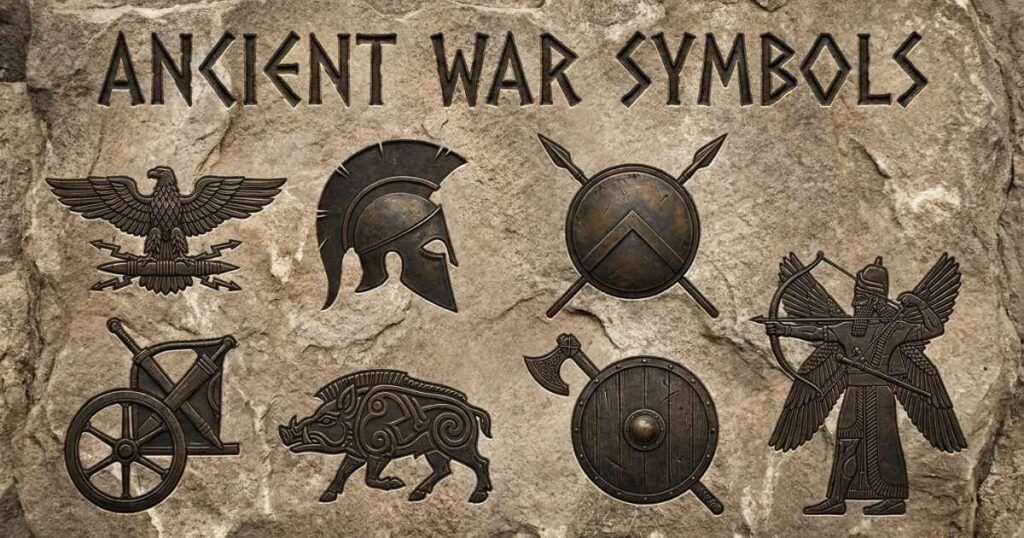
Ancient civilizations relied heavily on visual symbols since literacy was limited. Warriors used these marks to communicate rank, tribe, and intent.
The Roman eagle stood for imperial power and military dominance. Viking warriors used the Valknut, a symbol linked to Odin and fallen soldiers.
Egyptian soldiers carried symbols representing gods of war like Sekhmet. Greek hoplites painted personal or city emblems directly onto their shields.
Notable ancient war symbols include:
- The Roman Eagle (Aquila)
- The Valknut (Norse warrior symbol)
- The Ankh combined with weapons in Egyptian art
- The Spartan lambda letter on shields
These symbols were not decorative alone. They served practical purposes in identification and battlefield morale.
See Also: Winter Symbols
Modern Military Symbols
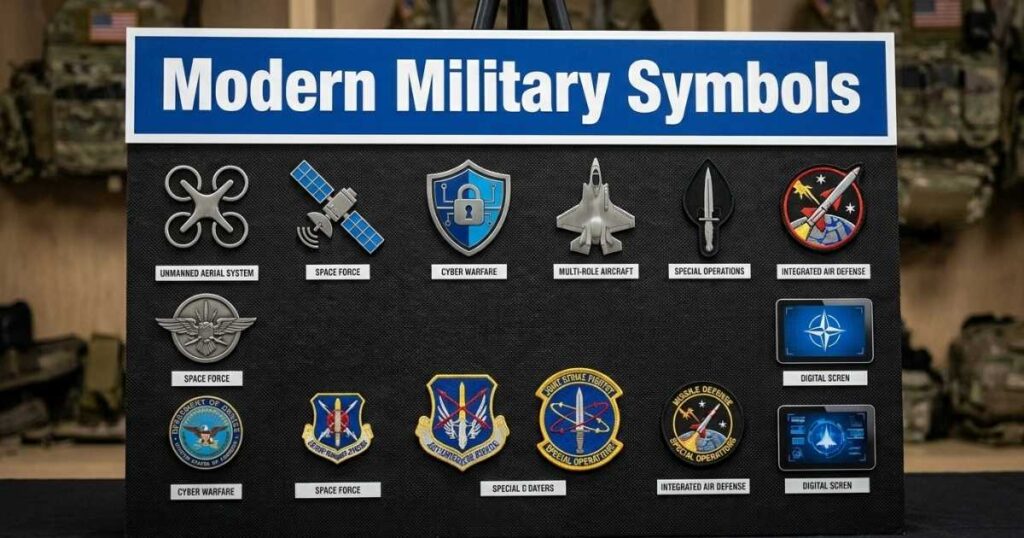
Modern armies use standardized symbols for maps, planning, and communication. These are often called military map symbols or NATO symbols.
They allow soldiers from different countries to understand strategic information quickly. Shapes and colors indicate friendly, enemy, or neutral forces.
| Symbol Type | Meaning |
| Blue Rectangle | Friendly ground forces |
| Red Diamond | Enemy forces |
| Green Circle | Neutral forces |
| Yellow Symbols | Unknown forces |
Modern insignia also includes rank badges, medals, and unit patches. Each design communicates experience, achievement, and role within the military structure.
War Symbols Emojis Copy and Paste
Emojis make war symbols accessible for everyday digital communication. You can copy these directly into texts, captions, or usernames.
Popular war related emojis include:
- ⚔️ Crossed Swords
- 🛡️ Shield
- 🔫 Water Gun (used as toy weapon symbol)
- 💣 Bomb
- 🏹 Bow and Arrow
- 🪖 Military Helmet
- 🚩 Triangular Flag
These emojis are supported across most devices and platforms. Simply copy the symbol and paste it into any app or website.
War Symbols Copy and Paste
Beyond emojis, Unicode text symbols also represent war themes. These work well for usernames, bios, or stylized text content.
Useful war themed Unicode symbols:
- ⚔ Crossed Swords Symbol
- 🗡 Dagger Symbol
- 🏰 Castle Symbol
- ⚓ Anchor Symbol (naval warfare)
- ☠ Skull and Crossbones
These symbols do not require special fonts. They work directly through standard Unicode support on most devices.
War Symbol Text
War symbol text refers to combining Unicode characters to create stylized names or messages. Gamers and social media users often use this style.
For example, someone might write a username like ☠XxWarKingxX☠ using symbols for emphasis. This adds visual impact without needing image editing tools.
Common war themed text characters include ⚔, ☠, 🗡, and ⚡. These are often paired with bold or gothic style fonts for stronger visual effect.
Many free online tools also convert normal text into stylish fonts. Combining these fonts with war symbols creates unique branding for gaming profiles.
See Also: Spiritual Symbols and Meanings
War Emoji Meanings
Different war emojis carry specific emotional or contextual meanings depending on usage. Knowing these meanings avoids miscommunication in casual chats.
| Emoji | Meaning |
| ⚔️ | Conflict, rivalry, battle |
| 💣 | Explosive danger, shock |
| 🪖 | Military service, soldier |
| 🏳️ | Surrender, truce |
| 🚩 | Warning, alert, red flag |
| 🛡️ | Protection, safety |
Context matters significantly with these emojis. A crossed swords emoji in gaming may mean competition, while in news contexts it may represent actual conflict.
Last War Emoji Copy and Paste
Last War is a popular mobile strategy game where players build bases and battle rivals. Many players search for matching emojis to use in their usernames or chat.
Suggested emoji combinations for Last War style profiles:
- 🔥⚔️🔥 for aggressive alliance names
- 🛡️👑 for leadership roles
- 💀⚡ for elite squad branding
- 🚩🏰 for territory control themes
These combinations help players stand out in leaderboards and alliance chats. Copy and paste them directly without needing any design software.
Military Symbols and Their Uses
Military symbols serve functional purposes beyond decoration. They communicate rank, unit type, and operational status instantly.
Key uses of military symbols include:
- Identifying friendly versus enemy positions on maps
- Displaying rank through insignia on uniforms
- Marking equipment ownership and unit assignment
- Representing awards and service history through medals
These symbols follow strict international standards, especially within NATO countries. This consistency prevents confusion during joint military operations.
Civilian sectors also borrow military symbolism. Sports teams and businesses use eagles, shields, and stars to convey strength and discipline.
War Symbols in Different Cultures
War symbolism varies significantly across world cultures. Each civilization developed unique icons based on beliefs, environment, and combat style.
| Culture | Notable War Symbol | Meaning |
| Norse | Valknut | Death in battle, Odin’s warriors |
| Japanese | Katana | Discipline, samurai honor |
| Native American | War Bonnet | Bravery, leadership |
| Roman | Eagle Standard | Imperial military power |
| African Zulu | Shield and Spear | Unity, tribal defense |
These symbols often carried spiritual meaning alongside their military function. Many were believed to offer protection or strength during combat.
Understanding cultural context prevents misuse of sacred or historically significant symbols. Some symbols remain culturally protected and should not be used casually.
War Flags and Battle Emblems
Flags have historically guided troops during battle. Soldiers followed flag positions to maintain formation and morale under chaotic conditions.
Battle emblems often included animals, weapons, or religious symbols. These represented the values and strength of the fighting group.
The white flag universally signals surrender or truce. In contrast, red flags often warned of danger or signaled an attack command.
Modern national flags still carry historical battle origins. Many countries designed their flags based on independence wars or revolutionary movements.
War Symbols in Games and Social Media
Video games heavily use war symbols for branding, ranks, and achievements. Icons like swords and shields represent player levels or in game currency.
Social media users adopt these symbols for profile names, bios, and captions. They express personality, gaming identity, or support for competitive teams.
Popular platforms allow easy emoji use without special coding knowledge. This has made war symbolism part of everyday internet culture.
Streamers and content creators also use battle themed symbols in thumbnails. This visually signals action packed or competitive content to viewers.
Frequently Asked Questions
What do war symbols mean?
War symbols represent conflict, power, protection, or military identity depending on their design and cultural origin.
Can I copy and paste war emojis anywhere?
Yes, most war emojis work across social media, messaging apps, and websites without special installation.
What is the most common war symbol?
Crossed swords ⚔️ remain one of the most widely recognized and used war symbols globally.
Are war symbols culturally sensitive?
Some symbols carry sacred or historical significance and should be used respectfully in proper context.
What is the Valknut symbol?
The Valknut is a Norse symbol linked to Odin and warriors who died in battle.
Do military symbols follow international standards?
Yes, many countries use NATO approved symbols to ensure clarity during joint operations.
Why do gamers use war symbol text?
Gamers use stylized war symbols to create unique usernames and stand out in competitive platforms.
Final Thoughts
War symbols connect ancient history with modern digital communication. From Roman eagles to gaming emojis, their core meaning of strength and conflict remains consistent.
Whether you are researching military history or looking for a quick emoji to copy, understanding these symbols adds value to your communication. Use them thoughtfully, especially when they carry cultural or historical weight.
With this guide, you now have both the meanings and ready to use symbols for any purpose you need.

Hi, I’m Ethan Brooks, the admin of SymbolHubz.com. Passionate about symbols, emojis, kaomojis, and text art, helping users discover creative ways to express themselves online.