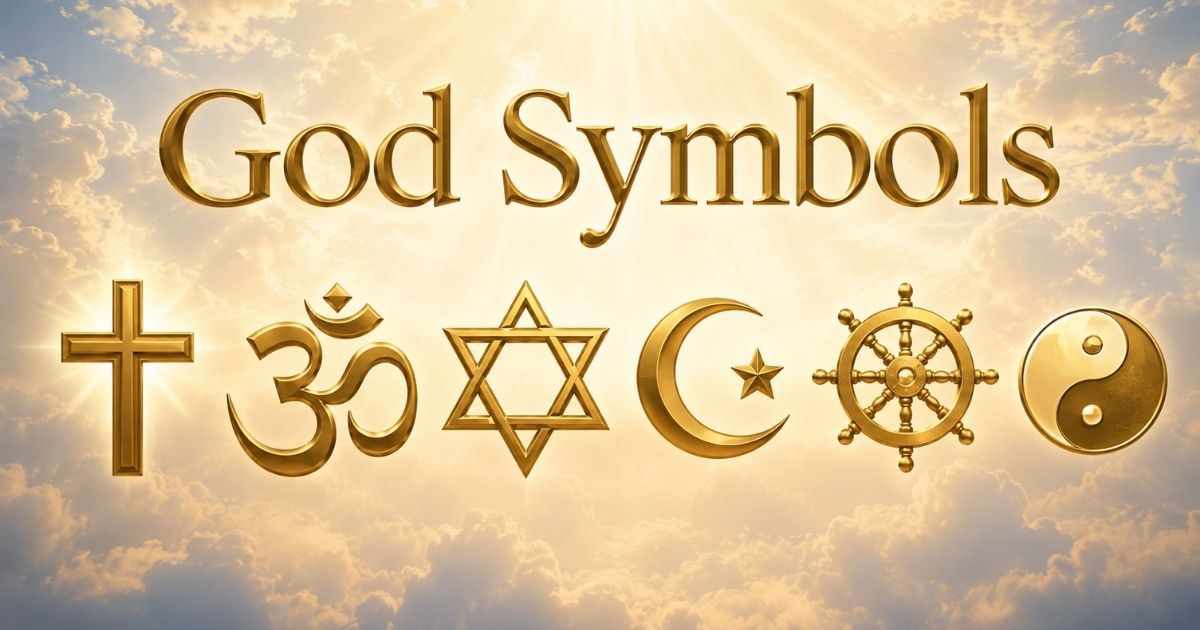

God symbols are visual signs like the cross, the Ankh, or Om that represent divine power, protection, or presence across different faiths and cultures. People have used them for thousands of years to express what words alone cannot capture: the mystery of the divine.
Long before anyone wrote down a single prayer, humans were carving suns, spirals, and animal shapes into cave walls. These weren’t random doodles. They were early attempts to explain forces bigger than themselves. Over centuries, those simple marks evolved into the rich religious iconography you see today in temples, jewelry, tattoos, and sacred texts.
In this guide, you’ll learn what god symbols really mean, where they come from, and why your brain reacts to them the way it does. We’ll walk through symbols from Greek mythology, ancient Egypt, Norse legend, Hindu tradition, and Christianity, plus a few you can copy and paste right now.
What Are God Symbols?
God symbols are images or signs used to represent a deity’s presence, power, or personality without needing a long explanation. Think of them as visual shorthand. A single trident tells you everything about Poseidon’s dominion over the sea, no story required.
These sacred symbols didn’t start in temples. They started with early humans trying to make sense of the sun, moon, storms, and animals around them. As ancient civilizations grew more organized, so did their symbolic language, eventually forming the divine symbols and holy symbols we recognize in modern religion and spiritual practices today.
God Symbols You Can Copy And Use Easily
If you just want symbols you can drop into a text message, social bio, or design project, you’re in the right place. Below are the most searched-for options, ready to use.
God Symbols Text
Here are common god symbols in simple text form: ✝ (Cross), ☦ (Orthodox Cross), ☪ (Crescent and Star), ॐ (Om), ✡ (Star of David), ☯ (Yin Yang), and 🔱 (Trident). Each one carries centuries of symbolic meaning packed into a single character.
God Symbols Copy And Paste
| Symbol | Character | Meaning |
| Cross | ✝ | Sacrifice and salvation |
| Om | ॐ | Sound of the universe |
| Star of David | ✡ | Divine protection |
| Crescent and Star | ☪ | Guidance and faith |
| Yin Yang | ☯ | Balance and harmony |
| Trident | 🔱 | Power over the sea |
These work great in bios, captions, or digital art. Just copy, paste, and you’re done. No design software needed.
You Can Also Explore: Woman Symbols
Powerful God Symbols And Meanings
Some spiritual symbols carry more emotional weight than others because they tap into universal human experiences: birth, death, protection, and hope. That’s what makes them “powerful” rather than purely decorative.
Below, we’ll break down the most commonly searched symbols, their meanings, and why they’ve lasted so long in human culture.
God Symbols And Meanings
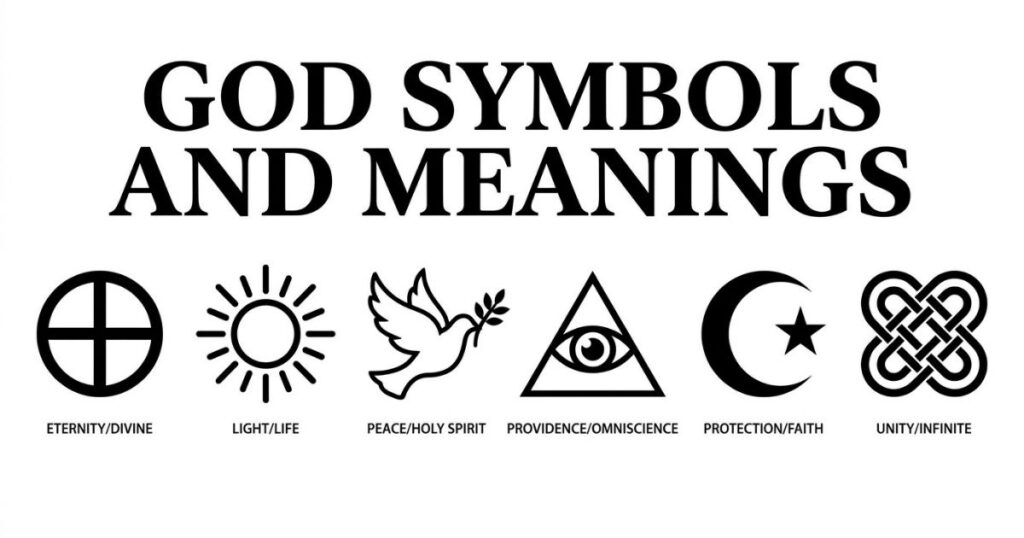
The cross represents sacrifice and salvation. Om symbolizes the sound of creation itself. The eye stands for divine watch and divine protection. The lotus reflects purity and spiritual awakening. The triangle often points to trinity or balance between forces.
Powerful Spiritual Symbols And Meanings
The mandala shows unity and interconnectedness, often used in sacred geometry practices. The infinity symbol reflects eternal existence. A spiral represents growth and transformation over time. The sun symbolizes life force, energy, and divine light across nearly every ancient culture.
Powerful Spiritual Symbols
You’ll find these symbols anywhere people practice meditation, energy healing, or prayer. They act as focal points, helping the mind settle and connect with something greater. That’s part of why they show up so often in yoga studios and wellness spaces across the U.S.
Greek God Symbols And Meanings
Greek mythology gave the world some of the most recognizable deity representations in history. Each Olympian god had a specific object or animal tied to their identity, and these mythology symbols still show up in tattoos, jewelry, and pop culture today.
You Can Also Explore: Hand Symbols
God Symbols Greek
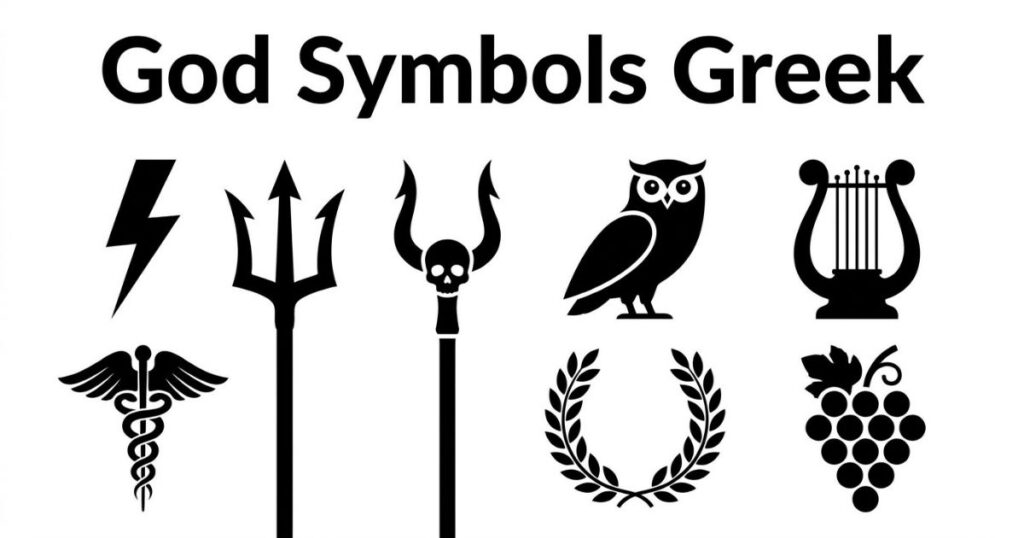
Greek symbolism is built around objects that reflect a god’s domain and personality, not abstract shapes. This makes Greek god symbols and meanings some of the easiest to remember and explain to others.
Greek God Symbols
| God | Symbol |
| Zeus | Thunderbolt |
| Poseidon | Trident |
| Athena | Owl |
| Apollo | Lyre / Sun |
| Hera | Peacock |
| Artemis | Bow and arrow |
Greek Gods Symbols And Meanings
The thunderbolt reflects Zeus’s raw authority over sky and storm. The owl represents Athena’s wisdom and sharp perception. The trident reflects Poseidon’s total command over the sea. Each symbol wasn’t just decorative; ancient Greeks believed these objects carried real divine authority.
Greek God Symbol
One symbol worth highlighting that often gets overlooked is Demeter’s sheaf of wheat, representing the harvest and fertility of the earth. It’s a great example of a faith symbol rooted in daily survival rather than warfare or power.
Greek God Symbols Percy Jackson
Modern readers, especially younger U.S. audiences, first discovered many of these symbols through the Percy Jackson book series. The franchise reintroduced ancient god symbols like the thunderbolt and trident to a new generation, blending mythology with contemporary storytelling.
Symbols Of Greek God
For quick reference, most Greek god symbols fall into three categories: weapons (thunderbolt, trident), animals (owl, eagle), and nature objects (laurel, wheat). This structure makes them easier to identify at a glance.
Greek God Symbol
When it comes to symbols representing God-like figures in Greek tattoo culture specifically, the thunderbolt and owl remain the two most requested designs in American tattoo studios.
You Can Also Explore: German Symbols
Greek God Symbols Tattoos
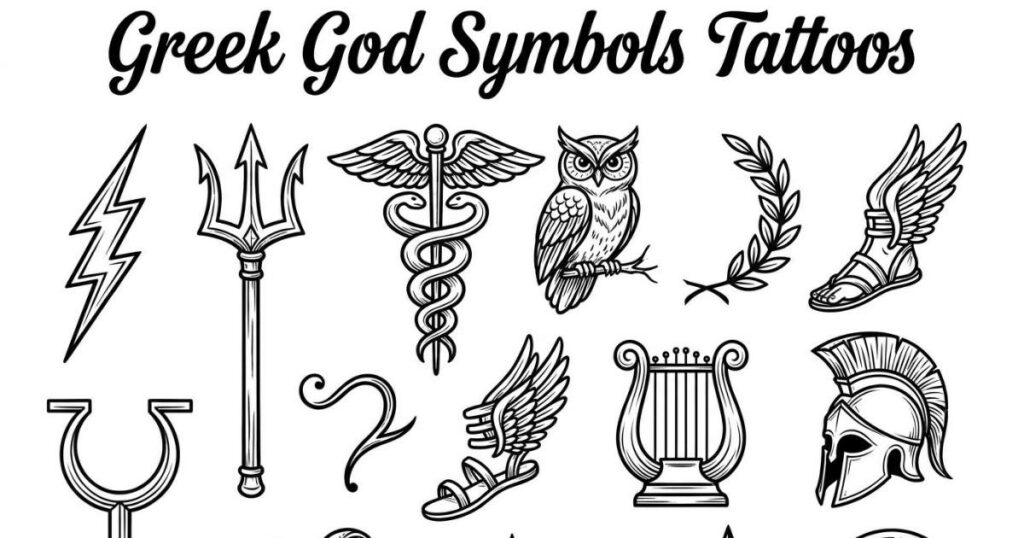
Tattoo studios across the U.S. report steady interest in Greek mythology designs. A Zeus lightning bolt typically works well on the forearm or shoulder. An Athena owl suits smaller placements like the wrist. Always research the symbol’s full meaning before committing, since some designs carry more historical weight than others.
Other God Symbols
Beyond Greek mythology, nearly every ancient culture developed its own visual language for the divine. These religious traditions span continents and thousands of years, yet many share surprisingly similar themes.
Roman God Symbols
Roman gods often mirrored Greek ones but carried different names and slightly different symbols. Jupiter’s symbol is lightning, Mars carries a spear and shield, and Venus is represented by a mirror, tying beauty to self-reflection.
Egyptian God Symbols
Egyptian sacred imagery is some of the oldest in recorded history. The Ankh represents life, the Eye of Horus symbolizes protection, and the scarab beetle reflects rebirth, all tied closely to the Nile’s cycles of life and death.
Norse God Symbols
Thor’s hammer, or Mjölnir, represents strength and protection. Odin’s raven symbolizes wisdom and memory. The Valknut connects to the afterlife and Odin’s role in guiding fallen warriors. These protective symbols remain popular in modern Scandinavian design.
Hindu God Symbols
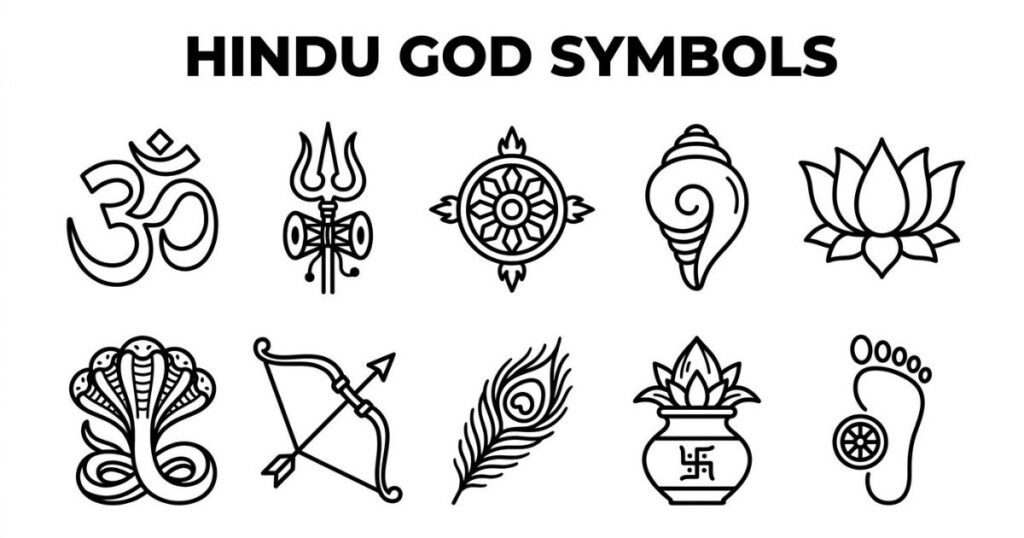
Om stands as the most sacred sound and symbol in Hinduism. The lotus reflects purity rising from muddy waters. The swastika, thousands of years older than its 20th-century misuse, historically symbolizes prosperity and good fortune across Hindu, Buddhist, and Jain traditions.
Aztec God Symbols
The Aztec sun stone represents time, the cosmos, and cyclical creation. The feathered serpent, Quetzalcoatl, symbolizes knowledge, wind, and the merging of earth and sky, a recurring theme in Mesoamerican sacred artifacts.
Chaos God Symbols
Chaos symbols are less about real-world mythology and more about fictional and fantasy universes, including tabletop games. They represent disorder, transformation, and infinite possibility rather than a specific historical deity.
Zeus God Symbols
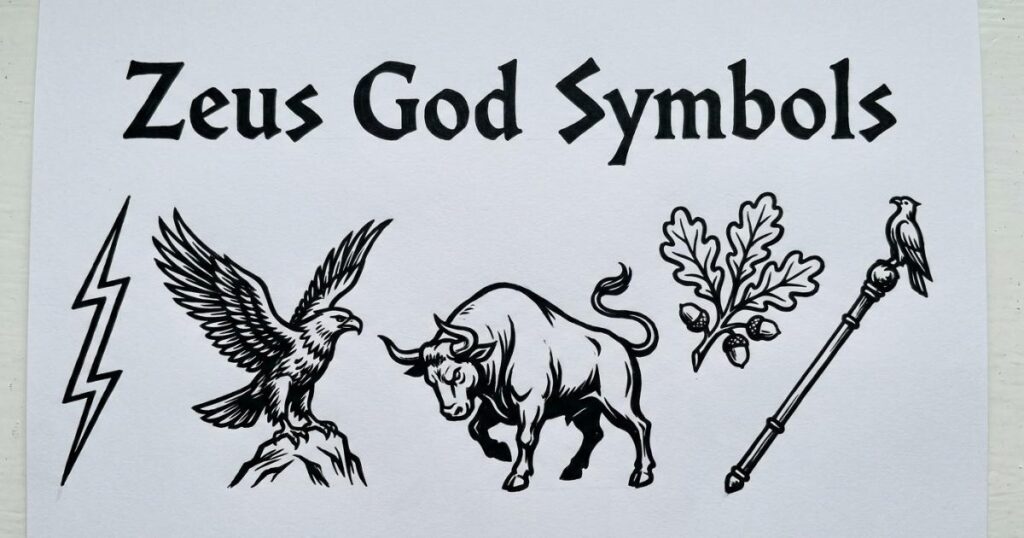
Zeus is defined by two main symbols: the lightning bolt and the eagle. Together, they represent supreme authority in the sky and on the battlefield, making Zeus one of the most tattooed Greek gods in the U.S.
Apollo Greek God Symbols
Apollo’s lyre represents music and harmony, while the sun reflects light, truth, and prophecy. As the god of healing and the arts, his symbols lean toward balance rather than force.
Ares Greek God Symbols
Ares, god of war, is represented by the spear and shield. Unlike Apollo’s harmony, Ares’s symbols reflect raw conflict and aggression, a stark contrast within the same pantheon.
Apollo God Symbols And Ares God Symbols
Comparing the two shows how Greek mythology balanced opposing forces. Apollo represents order, music, and healing. Ares represents chaos, violence, and instinct. Together, they illustrate the duality ancient Greeks saw in human nature itself.
Greek God Symbols
Let’s look at a few more Olympian figures whose symbols are frequently searched but often under-explained.
Hermes God Symbols
Hermes carries winged sandals, symbolizing speed, and the caduceus staff, symbolizing communication and trade. As the messenger god, his symbols reflect movement and connection between worlds.
Hermes Greek God Symbols
The caduceus specifically influenced modern medical branding in the U.S., though historically it represented commerce and negotiation rather than healing, a common point of confusion worth clearing up.
Hades Greek God Symbols
Hades rules the underworld, symbolized by the Helm of Darkness and Cerberus, the three-headed guard dog. His bident, a two-pronged staff, also represents his authority over the dead.
Hades God Symbols
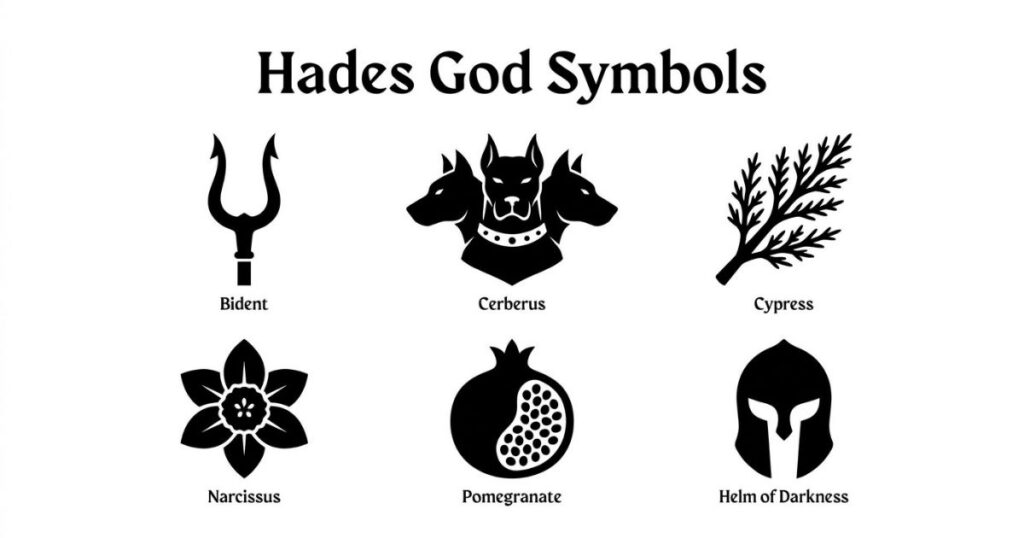
These symbols often carry mystery and hidden power rather than pure evil, a distinction many modern interpretations get wrong. Hades wasn’t considered a villain in ancient Greek belief; he was simply the ruler of a necessary realm.
Pan God Symbols
Pan, god of the wild, is represented by his flute and goat-like features. His symbols connect directly to nature, wilderness, and untamed spiritual energy.
Deity Symbol
A deity symbol simply refers to any image representing a god or divine being, regardless of religion. This broader term applies across Greek, Egyptian, Norse, and modern spiritual practices alike.
Symbol Of The Gods
Across the Greek pantheon, these symbols collectively tell one larger story: humans have always tried to give shape to forces they couldn’t fully control or explain.
Jesus Symbols
Christian iconography centers heavily on symbols tied directly to the life and teachings of Jesus Christ.
Symbol For Jesus
The cross remains the most recognized symbol for Jesus, tracing back to his crucifixion and representing sacrifice, redemption, and salvation for over two billion Christians worldwide today.
Jesus Symbol
Less commonly known is the fish symbol, or Ichthys, which early Christians used as a secret sign of faith during periods of persecution in the Roman Empire.
Jesus Symbols And Symbols For Jesus
Beyond the cross and fish, the Sacred Heart represents divine love, and the Chi-Rho, formed from the first two Greek letters of “Christ,” appears frequently in early Christian art and manuscripts.
Christian Symbols for God
Christianity uses several symbols beyond the cross to represent God’s presence and nature.
God Symbols Christian
The dove represents the Holy Spirit and peace. Alpha and Omega, the first and last letters of the Greek alphabet, symbolize God as the beginning and end of all things.
Symbol For God
There’s no single universal symbol for God even within Christianity, since different denominations emphasize different imagery based on theology and tradition.
Universal Symbol For God And Universal God Symbol
Across religions, light, circles, and infinity loops are frequently used as universal symbols for the divine, representing eternity, wholeness, and a presence without beginning or end.
God Symbols and Tattoos
Tattoos featuring symbols of God are among the most requested designs at studios across the U.S., often chosen to represent faith, protection, or personal transformation.
Symbols Of God
The cross, Om, Ankh, and Star of David top the list of most-requested spiritual tattoos, according to industry surveys from major U.S. tattoo publications.
God Symbolism
God symbolism shifts depending on personal belief, cultural background, and even geography, meaning the same image can carry very different weight from one person to the next.
Divine Symbols
Beyond specific deities, broader divine symbols like halos, angel wings, and sacred geometry patterns are increasingly popular in minimalist tattoo design.
Divine Symbol
The all-seeing eye is one of the most requested single divine symbols, often chosen to represent awareness, protection, or spiritual insight.
Deep Symbolic Meaning of God Symbols
Understanding why these symbols matter requires looking beyond religion into psychology and culture.
On a Spiritual Level
Spiritually, believers see these symbols as portals to higher consciousness. A circle, for instance, has no beginning or end, making it a natural stand-in for eternal divine presence.
On a Psychological Level
Psychologist Carl Jung argued that certain symbols live in what he called the collective unconscious, shared mental patterns across all humans. That’s why a sacred symbol can trigger awe or reverence even in people who aren’t religious.
On a Cultural Level
Culturally, these symbols show up on flags, buildings, and jewelry because they help define group identity. A single sign can instantly signal shared belief, history, or belonging within a community.
Types and Variations of God Symbols
Here’s a closer look at seven of the most historically significant symbols, along with when and where they first appeared.
1. The Ankh
Dating back over 3,000 years in Egyptian art, the Ankh represents eternal life and divine power. It appears throughout tomb art and amulets, linked to gods like Ra and Isis.
2. The Eye of Horus
This stylized eye symbolizes healing and royal authority, tied to Horus’s mythological battle to restore balance after his father Osiris was killed. It remains one of Egypt’s most reproduced symbols today.
3. Om
Found in Hindu scriptures dating back thousands of years, Om represents the primordial sound of creation and connects to Brahma, Vishnu, and Shiva simultaneously.
4. The Cross
Central to Christianity since the early centuries after Christ’s crucifixion, the cross represents sacrifice, love, and salvation, appearing in churches and personal jewelry worldwide.
5. The Star of David
Formed by two overlapping triangles, this hexagram represents divine protection and appears on the Israeli flag, strongly tied to Jewish identity and the story of King David.
6. The Crescent and Star
Associated with Islam and historically linked to the Ottoman Empire, this symbol represents guidance and divine light appearing through darkness.
7. Thor’s Hammer
Known as Mjölnir, this Norse symbol represents strength, protection, and blessing, frequently found in Viking-era jewelry and carvings across Scandinavia.
| Symbol | Culture | Core Meaning | Still Used Today? |
| Ankh | Egyptian | Eternal life | Yes, in jewelry and art |
| Eye of Horus | Egyptian | Protection | Yes, in tattoos |
| Om | Hindu | Creation | Yes, in meditation |
| Cross | Christian | Salvation | Yes, worldwide |
| Star of David | Jewish | Protection | Yes, national symbol |
| Crescent and Star | Islamic | Guidance | Yes, national flags |
| Thor’s Hammer | Norse | Strength | Yes, in modern jewelry |
God Symbols Across Cultures
Every civilization developed its own symbolic language, yet the emotional purpose behind these signs stays remarkably consistent.
Ancient Egypt
Egyptians treated symbols as functional spiritual tools, not decoration. The Ankh and Eye of Horus were believed to offer literal protection in both life and the afterlife.
Ancient Greece
Greek gods like Zeus used symbols such as the lightning bolt to convey authority and divine judgment, deeply woven into mythology symbols still recognized worldwide.
India
Hinduism relies heavily on sacred geometry, mantras, and deity-specific symbols. Om remains central to meditation, temple rituals, and daily prayer across the subcontinent.
Abrahamic Traditions
Christianity, Judaism, and Islam each use distinct religious symbols and meanings to express covenant, guidance, and moral law, while also sharing overlapping themes like light and divine unity. It’s also worth noting other major traditions have their own iconic marks: Buddhism uses the Dharma Wheel to represent the path to enlightenment, Sikhism uses the Ik Onkar to represent one universal God, and Zoroastrianism uses the Faravahar to represent the soul’s journey.
Norse and Celtic Cultures
Thor’s Hammer and intricate Celtic knotwork both reflect themes of protection and eternal cycles, connecting warriors and nature-based belief systems across Northern Europe.
God Symbols in Art, Movies and Pop Culture
Renaissance artists like Michelangelo used halos and radiant light to depict divine presence in painting. That visual language never really left; it just moved formats.
Modern films still lean on celestial light and glowing sigils to hint at divine intervention, while franchises like Percy Jackson and long-running fantasy series such as Supernatural keep reintroducing mythological symbols to new audiences. Tabletop games like Dungeons & Dragons built entire pantheons around custom deity symbols, giving players a way to express character identity through fictional god symbols. Fashion brands frequently borrow sacred motifs too, using them to signal mystery, power, or timeless style in jewelry lines and streetwear collections across the U.S.
Spiritual and Dream Meaning of God Symbols
Seeing god symbols in dreams often points to a few common themes:
- Spiritual awakening or a shift in personal beliefs
- A subconscious desire for protection or guidance
- Inner transformation or a major life change approaching
- Reconnection with faith after a period of doubt
For example, dreaming of a glowing cross or a bright Om symbol may reflect personal growth rather than anything literal. During meditation, visualizing these symbols can help focus the mind and create a genuine sense of calm and spiritual connection.
Positive vs Negative Meaning
Symbols rarely carry a single, fixed meaning. Context shapes everything.
Positive interpretations include protection, love, guidance, and the promise of eternal life. Negative interpretations can include fear of judgment, historical religious conflict, or symbols being used to justify control. The cross is a clear example: it represents salvation to one person and painful colonial history to another, depending entirely on lived experience and cultural background.
Why Humans Are Attracted to God Symbols
Humans are pattern-seeking by nature. When life feels chaotic, a familiar sacred symbol offers something steady to hold onto.
Psychologically, symmetrical shapes and radiant imagery activate feelings of order and calm in the brain. Emotionally, these symbols remind you that you’re not alone in searching for meaning, protection, or purpose. That combination, comfort plus connection, is exactly why holy symbols have survived for thousands of years and show no sign of fading from human culture anytime soon.
FAQ’s
What are the oldest god symbols in history?
Sun discs, fertility carvings, and early sacred geometry found in prehistoric caves rank among the oldest known ancient god symbols, some dating back over 10,000 years.
What is the most powerful god symbol?
There’s no single answer since power depends on belief, but the cross, Om, and Ankh are consistently ranked among the most emotionally significant symbols worldwide.
Are god symbols the same as religious symbols?
Mostly yes, though god symbols specifically represent a deity, while religious symbols can also represent broader concepts like faith communities or moral teachings.
Is it disrespectful to wear god symbols from another culture?
It depends on context and intent. Understanding a symbol’s history and meaning before wearing it shows respect and helps avoid unintentional cultural insensitivity.
What god symbol means protection?
The Eye of Horus, Thor’s Hammer, and the Star of David are all widely recognized protective symbols across their respective traditions.
Can two different religions share the same symbol?
Yes. The swastika, for example, holds sacred meaning in both Hinduism and Buddhism, showing how cultural symbolism can overlap across distinct faiths.
What’s the best god symbol for a tattoo?
That depends on personal meaning, but the cross, Ankh, and Om remain the most requested designs in tattoo studios across the U.S. today.
Conclusion
God symbols are far more than decorative images. They’re a compressed history of human belief, carrying stories of creation, protection, hope, and everything in between. Whether it’s the Ankh in ancient Egypt, the thunderbolt in Greek mythology, or the cross in modern Christianity, these signs still speak to something deep and unchanging in the human experience.
Next time you notice one, whether it’s on a necklace, a tattoo, or a temple wall, take a moment to consider its journey. You’re looking at thousands of years of belief, condensed into a single, lasting image.

Hi, I’m Ethan Brooks, the admin of SymbolHubz.com. Passionate about symbols, emojis, kaomojis, and text art, helping users discover creative ways to express themselves online.