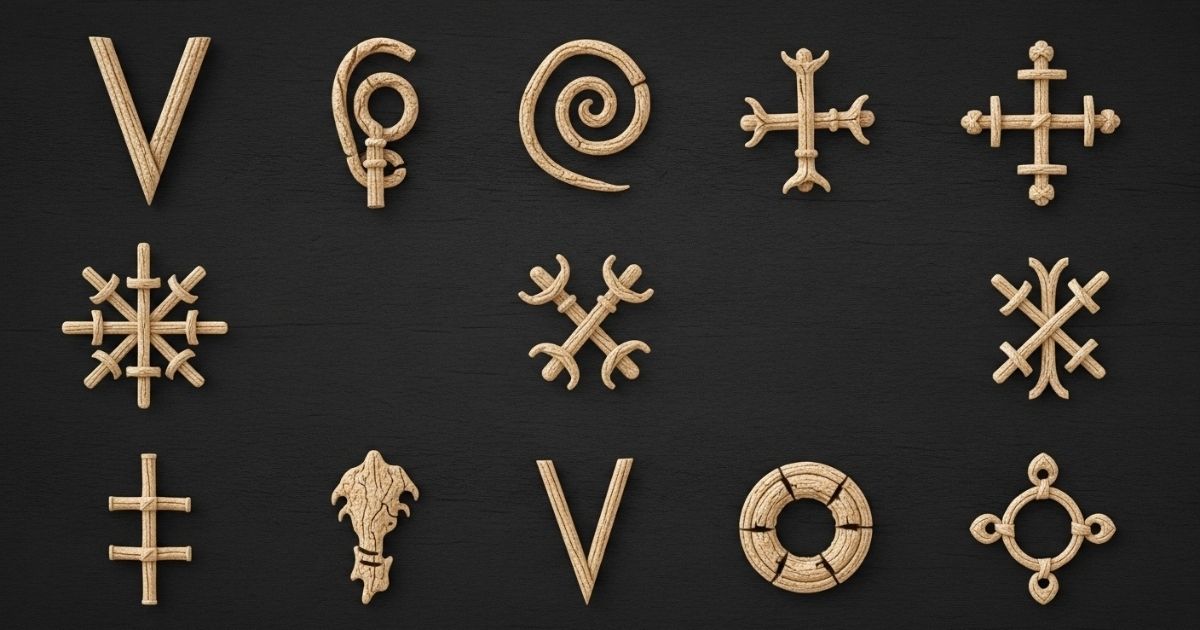

Voodoo symbols are sacred ritual drawings rooted in West African spiritual tradition, used for centuries to communicate with divine spirits, seek protection, and channel healing energy. If you’ve ever felt curious about these mysterious signs, you’re not alone. Millions of Americans search for voodoo symbols every year, drawn by genuine spiritual curiosity, cultural interest, or a desire to understand something that popular culture has long misrepresented.
This guide covers everything you need to know, from the true origins of these sacred signs to their specific meanings, spiritual purposes, and why they matter more than ever in 2026.
What Are Voodoo Symbols?
Voodoo symbols, more accurately called veves, are intricate sacred ritual drawings used in the religion of Haitian Vodou and related African diaspora traditions. Practitioners draw them during ceremonies using cornmeal, ash, flour, or brick dust, tracing each line with intention and prayer. The result isn’t just art. It’s a spiritual gateway.
The word “voodoo” itself traces back to the Fon word vodun, meaning spirit or deity. The religion developed in Haiti during the brutal colonial period, when enslaved Africans from the Fon and Ewe peoples of modern-day Benin and Togo preserved their spiritual identity despite extreme suppression. They blended West African Vodun with elements of Catholic imagery to survive, and veves became their spiritual language.
It’s important to understand the difference between three related but distinct terms. “Voodoo” is a Westernized pop culture term, often tied to Hollywood stereotypes. “Vodou” is the Haitian spiritual tradition, a living religion officially recognized by Haiti in 2003. “Vodun” is the older West African root tradition. Each veve in Vodou serves as a spiritual address for a specific Lwa (spirit). Think of it as calling a direct line to divine energy.
Read More: 20+ Hidden Symbols of Rebirth You See Every Day but Never Notice
Voodoo Symbols | Meanings, Uses and Types
Voodoo symbols cover a wide range of spiritual purposes. They’re used for protection, love, healing, good fortune, and communicating with ancestors. Understanding their categories helps you appreciate the depth of this spiritual system.
Voodoo Symbols for Death
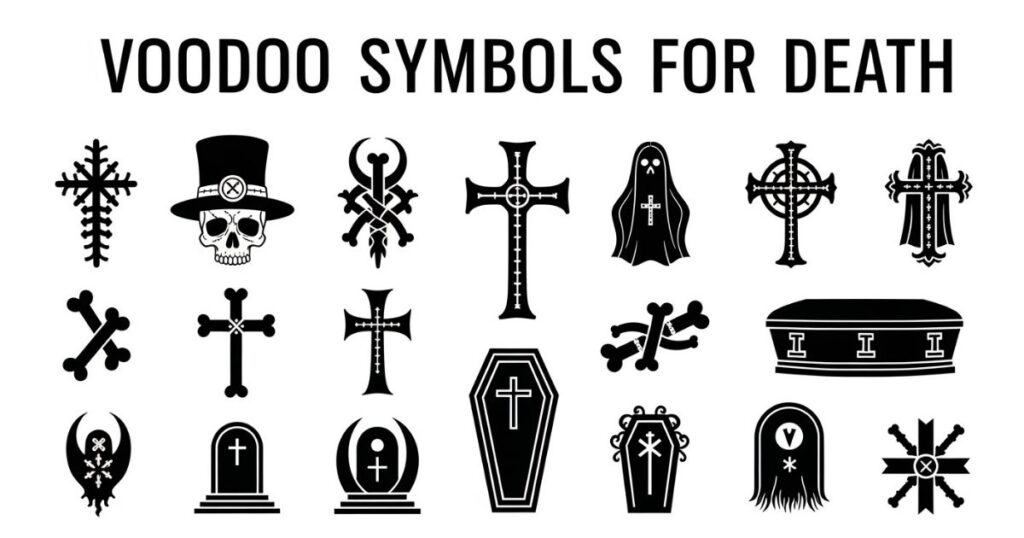
Death symbols in Vodou don’t represent horror. They represent spiritual transformation and transition between the living world and the spirit world. The most recognized death-related veve belongs to Baron Samedi, whose cross and coffin motifs honor the natural cycle of life. These symbols are used in ancestor reverence rituals, helping practitioners maintain a respectful connection with those who have passed.
In Haitian spiritual traditions, death is seen as a doorway, not an ending. Rituals using death symbols often serve as healing ceremonies for grief.
Voodoo Symbols PDF
The growing interest in voodoo symbols has led many people to search for downloadable reference guides. A quality voodoo symbols PDF should include accurate veve drawings, the Lwa each symbol represents, ritual context, and historical background. However, be cautious. Many files circulating online contain inaccurate or fabricated designs. For reliable information, look for academic sources rooted in Haitian cultural studies.
Voodoo Symbols for Good Luck
Good luck symbols in Vodou are tied to specific Lwa associated with abundance and harvest. Zaka, the spirit of agriculture, is connected to prosperity and earthly blessings. Practitioners use good luck symbols by drawing them with intention, placing them in homes, or incorporating them into spiritual rituals designed to open doors for positive opportunities.
Voodoo Symbols Meaning
Every voodoo symbol carries meaning directly tied to the Lwa it represents. That meaning also shifts based on ceremony context, timing, and the practitioner’s intention. A symbol used for healing in one ceremony might serve a protective purpose in another. This is exactly why understanding voodoo symbol meaning before using any sign is essential. Using a symbol without knowing its purpose can create spiritual confusion.
Voodoo Symbols Images
Veves are visually complex and genuinely beautiful. They combine curves, crosses, hearts, serpents, and geometric forms into designs that feel both ancient and alive. In modern use, voodoo symbols images appear in tattoo art, spiritual jewelry, prints, and digital media. Always view these images in their cultural context. A veve is not clip art. It carries centuries of meaning.
Voodoo Symbols Alastor
Here’s something most articles get wrong. Alastor is not a Lwa in Haitian Vodou. Alastor originates from Greek mythology and later demonological texts as a spirit of vengeance. The term “Alastor voodoo symbols” became popular through gaming, anime, and fantasy content, most notably through the character Alastor in the animated series Hazbin Hotel. If you’re researching authentic Vodou practice, this is a pop culture crossover, not a legitimate voodoo symbol tradition.
Read More: 73+ Best Sleep Token Symbols | Hidden Meanings, Sacred Geometry and the Dark Poetry Behind the Mask
Voodoo Symbols for Love
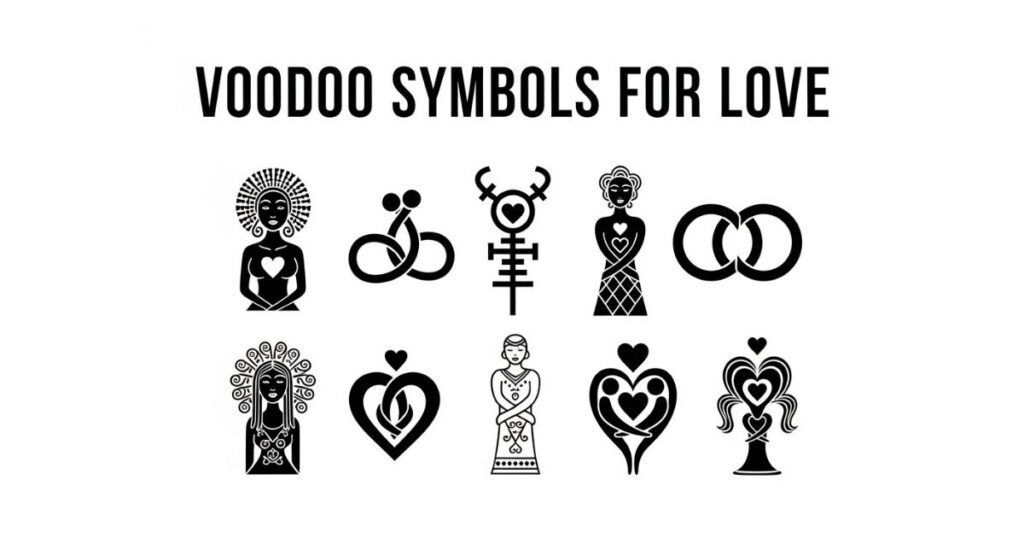
Erzulie Freda is the Lwa of love, and her veve is one of the most visually stunning in all of Vodou. It features an ornate heart decorated with flowing curls and crown elements. Love symbols in Vodou are used for attracting romance, healing emotional wounds, and strengthening existing relationships. These rituals focus on genuine heart energy, not manipulation.
Voodoo Symbols for Protection
Protection symbols are the most widely used category in modern spiritual practice. Ogou’s veve, featuring a machete and angular geometric lines, channels warrior strength and shields against negative energy. Papa Legba’s crossroads veve also carries protective qualities as the gatekeeper of all spiritual pathways. Many people place protection veves at home entrances, wear them as pendants, or incorporate them into personal rituals.
Understanding Voodoo Symbols and Their Meanings
Voodoo Symbols and Meanings
Each veve functions as a spiritual map connecting the physical world to divine energy. These meanings have been preserved and passed down through oral tradition and ceremonial practice across generations, making them living cultural documents rather than static designs.
Vodou Symbols
In authentic Haitian practice, Vodou symbols are drawn by trained Houngans (priests) or Mambos (priestesses) within a sacred ceremonial space called a Peristyle. The drawing process itself is a form of prayer. The materials used, whether cornmeal, gunpowder, or ash, carry their own symbolic significance based on the Lwa being invoked.
Symbols of Voodoo
A veve alone is incomplete. Voodoo symbols function as part of a broader ceremonial system that includes sacred colors, offerings, songs, and ritual objects. Together, these elements create a complete spiritual communication system, similar to how words, tone, and context combine to create meaningful language.
Voodoo Religion Symbols
Vodou is a genuine world religion. Its symbols carry the same sacred weight as a cross in Christianity or a Star of David in Judaism. Since Haiti’s official recognition of Vodou in 2003, there has been growing international respect for its spiritual heritage and the symbols that define it.
Voodoo Religion Symbol
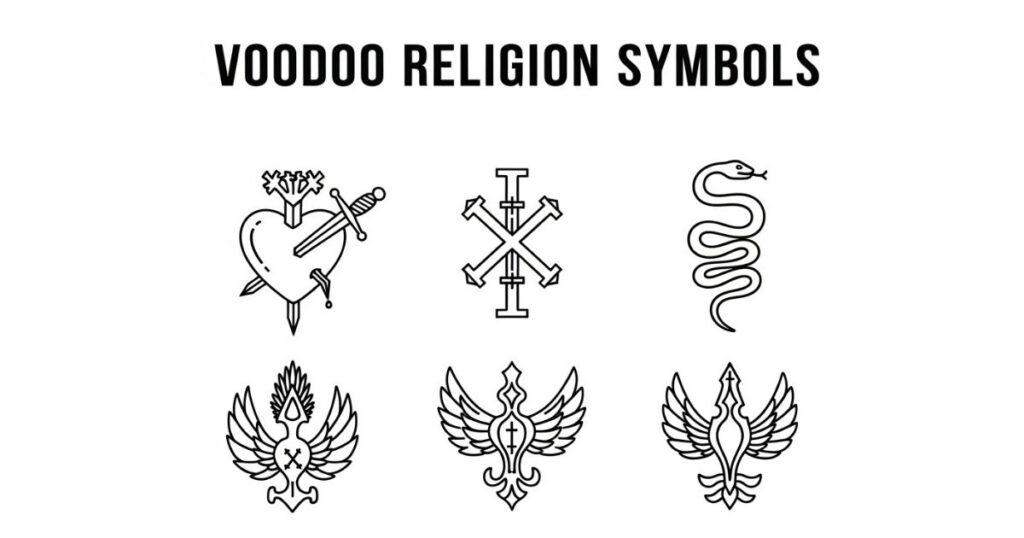
A single voodoo religion symbol can hold enormous spiritual significance. Papa Legba’s crossroads veve, for example, is always drawn first in any Vodou ceremony because without his blessing, no other spirit communication can begin.
Voodoo Symbolism Religion Symbols
Vodou symbolism reflects a brilliant spiritual strategy. When enslaved Africans were forced into Catholicism, they mapped their Lwa onto Catholic saints to preserve their traditions. Papa Legba became associated with Saint Peter because both are keepers of the keys. This layered symbolism allowed African spirituality to survive colonialism hidden in plain sight.
Voodoo Symbols and Their Meanings
Here’s a quick reference for the most important voodoo symbols and their meanings:
| Symbol | Lwa | Primary Meaning |
| Crossroads veve | Papa Legba | Spiritual doorways, destiny |
| Heart veve | Erzulie Freda | Love, beauty, feminine power |
| Cross and coffin | Baron Samedi | Death, rebirth, transformation |
| Twin serpents | Damballa | Wisdom, creation, ancestral healing |
| Machete veve | Ogou | Strength, protection, justice |
Voodoo Symbols and Meaning
It’s worth repeating: meaning in Vodou is never fixed or one-dimensional. Context, ceremony, and the practitioner’s spiritual relationship with a Lwa all shape how a symbol functions. This depth is exactly what separates authentic Vodou symbolism from its pop culture imitations.
Types of Voodoo Symbols Around the World
Haitian Voodoo Symbols
Haiti is the heartland of Vodou. Veves developed here as acts of spiritual resistance against French colonial rule. They’re among the most documented and studied sacred symbols in the African diaspora tradition.
Haitian Voodoo Symbols and Meanings
Haitian voodoo symbols are directly tied to specific Lwa whose personalities reflect both African mythology and Haitian historical experience. Erzulie Dantor, for example, is distinct from Erzulie Freda. She represents fierce maternal love and protection and is the patron of single mothers and survivors of violence.
African Voodoo Symbols
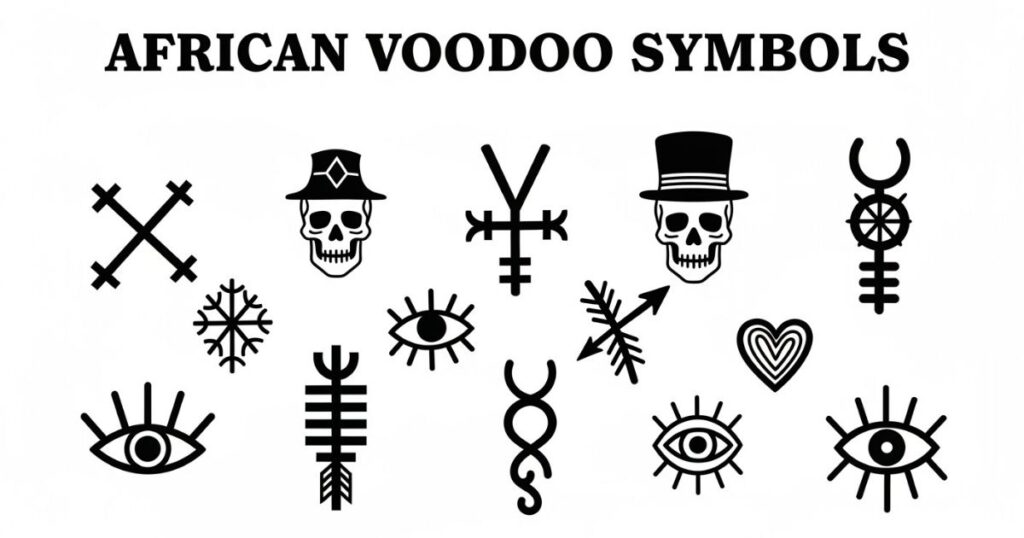
West African Vodun, practiced openly in Benin and Togo, represents the oldest layer of this spiritual tradition. African voodoo symbols honor nature spirits, ancestors, and cosmic forces. They tend to be simpler in design but carry the same foundational spiritual weight as their Haitian descendants.
Louisiana Voodoo Symbols
Louisiana Voodoo developed separately from Haitian Vodou, blending Creole folk magic, Native American herbalism, and French Catholic influence. Marie Laveau, the legendary Voodoo Queen of New Orleans, popularized many of its symbols in the 19th century. Her influence still shapes how New Orleans Voodoo is practiced and perceived today.
New Orleans Voodoo Symbols
In New Orleans, voodoo symbols appear in gris-gris bags, spiritual candle work, and the city’s thriving spiritual shop culture. They’ve become woven into the artistic identity of the city, appearing in Mardi Gras imagery and tattoo culture throughout the American South.
Veve Voodoo Symbols
Veves are the most recognized and spiritually specific form of voodoo symbols. Unlike general spiritual markings, each veve belongs exclusively to one Lwa. No two hand-drawn veves are identical since slight natural variations are considered acceptable and even spiritually meaningful.
Voodoo Veve Symbols and Meanings
What makes a veve different from other sacred symbols is the combination of drawing as prayer, ceremonial context, and living spiritual relationship. A veve is not stamped or printed in authentic practice. It’s drawn fresh in each ceremony as an active invitation.
Protection, Signs and Special Voodoo Symbols
Voodoo Protection Symbols
Protection is the most requested spiritual service in Vodou practice. Ogou’s veve channels martial strength and spiritual defense, while Papa Legba’s crossroads symbol guards all spiritual entry points.
Voodoo Symbols of Protection
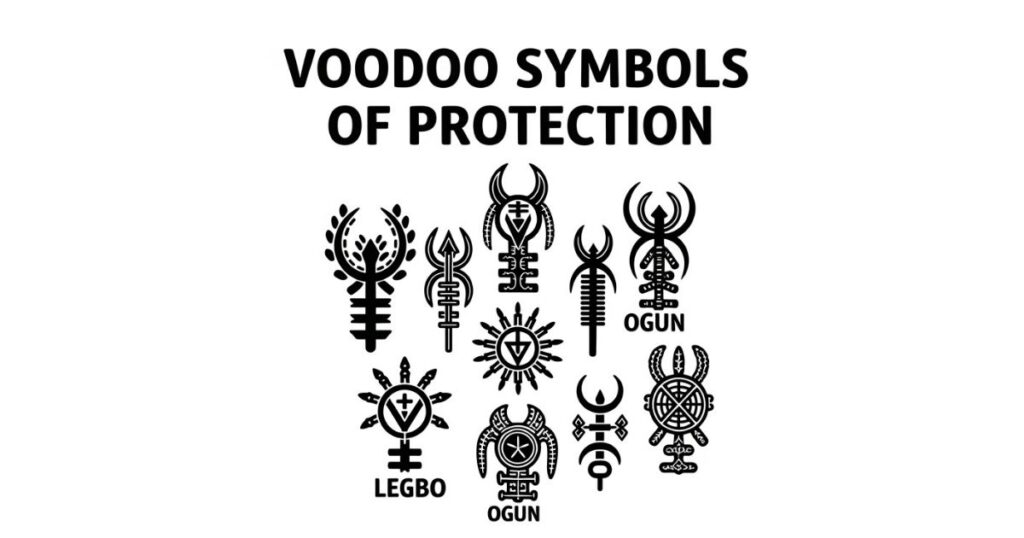
People use protection veves in very practical ways: drawn at home entrances, placed beneath thresholds, worn as engraved pendants, or included in prayer altars. The symbol works as a spiritual shield when activated with genuine intention.
Voodoo Symbol for Death
Baron Samedi’s cross and coffin motif is misunderstood more than almost any other voodoo symbol. It doesn’t invite death. It honors the natural transition between worlds and is used in funeral rites to guide spirits peacefully into the afterlife.
Voodoo Hand Signs
Voodoo hand signs are gesture-based forms of spiritual communication used during ceremonies to channel energy and signal specific intentions to the Lwa. These gestures are rooted in initiatory practice and aren’t widely documented outside of traditional Vodou communities.
Voodoo Signs
Simpler than full veves, voodoo signs are often drawn quickly in chalk or powder on walls, gates, or ritual spaces to invite general blessings or spiritual presence into an environment.
Voodoo Signs and Symbols
Together, voodoo signs and symbols form a complete spiritual language. Signs provide the vocabulary while veves provide the full grammatical structure of spirit communication. Used together, they allow practitioners to have layered, nuanced conversations with the divine.
Unique and Modern Voodoo Symbol Uses
Voodoovoodoo Symbols
The term “voodoovoodoo symbols” circulates online as a catch-all search phrase for voodoo-related designs in digital and pop culture spaces. If you’re exploring this online, approach with care. Many designs labeled this way blend authentic Vodou symbols with unrelated occult imagery.
Voodoo Symbols PNG
The demand for voodoo symbols PNG files has grown significantly in tattoo design, graphic art, and digital creative projects. Always source from culturally accurate references. Halloween-themed clip art frequently misrepresents authentic veve designs in harmful and inaccurate ways.
Alastor Voodoo Symbols
As mentioned earlier, Alastor voodoo symbols are a product of pop culture rather than authentic Vodou tradition. They appear most prominently in fantasy gaming and animation. If you love the aesthetic, that’s valid, but be clear about the distinction between cultural fantasy and living spiritual practice.
Deep Symbolic Meaning
On a Spiritual Level
In Vodou belief, drawing a veve with genuine intention physically opens a pathway for divine energy to enter the ceremony. The symbol becomes a living spiritual gateway, not a passive decoration. Practitioners describe the moment a Lwa arrives as a palpable shift in the energy of the room.
On a Psychological Level
Sacred geometry in veves activates something deep in human consciousness. The combination of symmetry, curves, and repetitive patterns triggers what Carl Jung called archetypal recognition, a subconscious response to shapes that carry ancient human meaning. This is why voodoo symbols produce such strong emotional reactions even in people unfamiliar with Vodou.
On a Cultural Level
Perhaps most powerfully, veves represent human resilience at its most profound. Enslaved Africans stripped of language, homeland, and freedom preserved their entire spiritual worldview through these drawings. Every line traced in cornmeal was an act of cultural survival. That history lives in every symbol.
Types and Variations of Voodoo Symbols
1. Papa Legba Veve
Visual: Crossroads pattern with a walking cane, keys, and sun motifs. Meaning: Gatekeeper of the spirit world, opener of destiny’s doors. Papa Legba is always the first spirit invoked in any Vodou ceremony. Without his blessing, no other spiritual communication is possible. His symbol reflects balance between worlds and the weight of every choice.
2. Erzulie Freda Veve
Visual: An ornate decorated heart with flowing curls and crown elements. Meaning: Love, beauty, luxury, emotional depth, feminine spiritual power. Erzulie Freda’s veve is among the most beautiful in all of Vodou. She represents the full complexity of romantic love, including its joy, longing, and grief.
3. Baron Samedi Veve
Visual: A bold cross combined with coffin shapes and skull motifs. Meaning: Death, transformation, spiritual rebirth, dark humor. Baron Samedi reminds us that death is not the enemy. His symbol acknowledges mortality while celebrating spiritual continuity and the dark comedy of human existence.
4. Damballa Veve
Visual: Two intertwined serpents forming fluid loops and curves. Meaning: Creation, purity, cosmic wisdom, ancestral healing. Damballa is one of the oldest Lwa, associated with the sky and primal creative force. His serpent symbol carries life energy, not evil. It’s a reminder that wisdom moves in waves, not straight lines.
5. Ogou Veve
Visual: A sword or machete surrounded by angular geometric lines. Meaning: Strength, justice, warrior protection, decisive leadership. Ogou protects with fierce purpose. His veve radiates authority and is widely used in protection rituals and spiritual work involving courage and action.
Voodoo Symbols Across Cultures
West Africa
Vodun began among the Fon and Ewe peoples of modern-day Benin and Togo. These symbols honored nature spirits, divine forces, and ancestors as part of everyday community life, not secret ritual.
Haiti
In Haiti, African spirituality merged brilliantly with Catholic visual imagery as a survival strategy under colonial rule. Saints became visual stand-ins for Lwa, and veves became quiet acts of spiritual resistance.
Louisiana
Louisiana Voodoo centered in New Orleans absorbed Creole folk magic, Native American healing traditions, and Catholic ritual. Marie Laveau transformed these symbols into a cultural force that still resonates today.
Caribbean and Brazil
In Cuba, Santería uses patakí markings. In Brazil, Candomblé uses pontos riscados. These systems share West African roots with Vodou, each adapting sacred symbols to their specific cultural landscape.
Modern Global Spirituality
In 2026, voodoo symbols have entered mainstream global spiritual culture. There’s a growing movement to engage with these symbols respectfully, recognizing them as living heritage rather than exotic decoration.
Voodoo Symbols in Art, Movies and Pop Culture
Hollywood did real damage to public understanding of Vodou. Horror films turned sacred symbols into props for evil. The 1915 to 1934 US occupation of Haiti actively promoted anti-Vodou propaganda to justify colonial control, and those stereotypes shaped American pop culture for generations.
But artists are pushing back. Contemporary Black artists and Haitian diaspora creatives are using veve imagery to explore identity, ancestry, and spiritual resilience in galleries, murals, and digital art worldwide. Baron Samedi appeared in James Bond’s Live and Let Die, but his pop culture image barely scratches the surface of his spiritual complexity.
The growing popularity of veve-inspired tattoos raises real questions about cultural appreciation versus cultural appropriation. The difference comes down to understanding and respect. A tattoo chosen with genuine knowledge of its meaning honors the tradition. A tattoo chosen purely for aesthetics without any awareness of its roots does not.
Spiritual and Dream Meaning of Voodoo Symbols
Seeing voodoo symbols in dreams often signals spiritual awakening or an approaching threshold moment in your life. The crossroads symbol typically reflects a major decision coming into focus. A serpent veve suggests healing and transformation, the shedding of an old identity. The heart veve can indicate an emotional opening or a significant relationship shift. Baron Samedi’s cross in a dream often represents an ending that carries the seed of something new.
The key principle is the same in dreams as in ceremony: symbols carry meaning only when you bring awareness to them. Without intention and reflection, they’re just images. With attention, they become genuine spiritual messages.
Positive vs Negative Meaning
Positive Meaning
The overwhelming majority of voodoo symbols serve deeply positive purposes: protection, healing, love, ancestral guidance, community strength, and spiritual clarity. Vodou is fundamentally a religion of care, connection, and resilience.
Negative Interpretation
The negative reputation of voodoo symbols didn’t come from the tradition itself. It came from colonial propaganda designed to demonize African spiritual practices and justify enslavement and occupation. Hollywood then amplified those distortions for entertainment. The symbols themselves are spiritually neutral. Like any tool, their effect depends entirely on the intention behind their use.
Why Humans Are Attracted to Voodoo Symbols
Humans are wired to seek hidden meaning. We’re drawn to patterns, mystery, and the possibility that the visible world is only part of the story. Voodoo symbols satisfy all three of those drives at once.
There’s also the weight of history behind them. These aren’t symbols invented last week by a graphic designer. They carry centuries of genuine spiritual practice, cultural survival, and ancestral memory. That depth is something you can feel even if you can’t fully explain it.
People who research voodoo symbols are often, at their core, looking for something real. Whether that’s spiritual connection, cultural understanding, or simply a deeper relationship with the invisible forces that shape human life, these symbols offer a genuine entry point.
Frequently Asked Questions
Are voodoo symbols evil or dangerous?
No. Voodoo symbols are sacred ritual tools in a living spiritual religion. Their negative reputation comes from colonial propaganda and Hollywood fiction, not from the tradition itself.
What is the difference between a veve and a regular spiritual symbol?
A veve is drawn fresh in each ceremony as an active spiritual invitation. It’s not stamped, printed, or mass-produced. Its power comes from the combination of the drawing, the prayer, and the ceremonial context.
Can anyone draw a veve?
In traditional practice, veves are drawn by trained Houngans or Mambos within sacred ceremony. Copying a design casually is possible but carries no spiritual activation without the proper ritual context.
Is it disrespectful to use voodoo symbols in tattoos or art?
It depends entirely on intention and understanding. Choosing a symbol with genuine knowledge of its meaning and cultural roots is a form of respect. Using it purely as decoration without any awareness is problematic.
What is the most powerful voodoo symbol?
Papa Legba’s crossroads veve is arguably the most foundational since no other spirit communication can happen without his blessing. But power in Vodou depends on relationship, not hierarchy.
How are voodoo symbols different in Haiti vs. New Orleans?
Haitian Vodou symbols are tied to specific Lwa within a structured ceremonial tradition. New Orleans Voodoo symbols developed through Creole folk magic and carry additional influences from Native American and Catholic traditions.
Do voodoo symbols work without religious belief?
In authentic Vodou practice, the symbols function within a living spiritual relationship with the Lwa. Without that context, a symbol is a drawing. The spiritual dimension comes from intention, practice, and genuine engagement.
What does the crossroads symbol mean in Vodou?
The crossroads represents spiritual choice, destiny, and transition between worlds. It’s the domain of Papa Legba and symbolizes every significant threshold in a person’s spiritual and physical life.
Conclusion
Voodoo symbols are not artifacts of darkness. They’re living testaments to human resilience, spiritual intelligence, and cultural survival. Every line drawn in cornmeal carries centuries of memory forward. Every veve is a prayer, a bridge, and a declaration that the invisible world still matters.
When you look at these symbols now, you’re not just seeing mysterious shapes. You’re seeing the fingerprints of entire communities who refused to let their spiritual identity be erased. In 2026, as global interest in indigenous and diaspora spirituality continues to grow, understanding these symbols with accuracy and respect matters more than ever.
Approach them with curiosity, take time to learn their real context, and you’ll discover one of the richest spiritual symbol systems in human history.
Hi, I’m Ethan Brooks, the admin of SymbolHubz.com. Passionate about symbols, emojis, kaomojis, and text art, helping users discover creative ways to express themselves online.